
I’ve always been fascinated by the incredible diversity of horse breeds that inhabit our world. From the lithe and swift Arabian horses to the sturdy and resilient Shire, each breed boasts unique characteristics and histories that are as rich and varied as the cultures they come from. With over 400 recognized equine breeds, the list is as expansive as it is impressive, painting a vivid picture of the equine world in all its glory.
My enthusiasm for horses compels me to embark on an alphabetical journey, exploring the Horse Breeds A-Z. This complete guide offers not just a list of names but also provides descriptions, pictures, and interesting snippets of information. The goal is to capture the essence of each breed, highlighting the traits that make them special and the roles they’ve played throughout history.

Whether you’re a seasoned equestrian or just someone who loves horses, there’s something magical about discovering the various types of breeds that roam the globe. With each breed comes a story, and I’m excited to share this ultimate guide to all horse breeds with you. Prepare to be charmed by these magnificent creatures’ beauty, strength, and intelligence as we trot through the A-Z of horse breeds, uncovering the splendid variety this part of the animal kingdom has to offer!
Don’t forget to try out our horse breed finder at the end!
History and Evolution of Horse Breeds
I’m thrilled to share the journey that horses have undertaken through history! The story sweeps across the plains of Central Asia, where, over 6,000 years ago, the domestication of horses radically changed human civilisation. By selectively breeding these majestic creatures for speed, strength, and temperament, an incredible variety of horse breeds emerged.
In the Middle Ages, the war horse was a sight to behold on the battlefield. Bred for both strength and agility, these horses were the pride of knights and armies. With the stout build to carry a knight in full armour, they were indispensable in warfare.
Oldest Horse Breeds:
- Arabian: Known for their endurance and speed.
- Akhal-Teke: Recognised for their metallic sheen and agility.

As history galloped on, I find it enchanting how horses became agents of exploration and conquest. The Spanish Conquistadors brought horses, including their venerable Andalusians, to the New World. The re-introduction of the horse to the Americas had a profound impact on the indigenous cultures and the future development of horse breeds there.
Modern Breeds and Uses:
- Thoroughbred: Racing
- Clydesdale: Heavy labour, great for farm work.
- Shetland Pony: Companionship and small-scale labour
Through selective breeding over millennia, humans have shaped the evolution of horses, creating breeds with characteristics suited for diverse intentions—from the powerhouses for knights of old to graceful racers thundering across tracks, I’m always astounded by how integral horses have been to our story.
Horse Breeds by Region
I find the diversity of horse breeds across the globe absolutely fascinating. Each region has developed horse breeds that are uniquely suited to its climate, culture, and needs. From hardy mountain ponies to elegant sport horses, these animals have been shaped by their environment and human partnership.
North American Breeds
North America is home to a colourful tapestry of equestrian culture. The American Quarter Horse stands out with its exceptional sprinting capabilities over short distances, often associated with western rodeo events. The stately American Saddlebred is another breed that hails from the United States, known for its showy and spirited nature. For something a bit different, one can look to the American Paint Horse with its distinctively patterned coat and amiable temperament.
- American Cream Draft: A rare draft horse known for its creamy coat and amber eyes.
- Thoroughbred Horse: Renowned for racing, originating from the UK but now integral to America.
- Miniature Horse: Despite their small stature, they carry the spirit of their larger counterparts.
European Breeds
Moving on to Europe, myriad breeds have emerged from this continent’s lengthy equestrian history. The Dutch Warmblood has gained a reputation as a leading sport horse, suitable for dressage and jumping. In the UK, the Shetland Pony from the Shetland Islands is adored for its strength and resilience despite its diminutive size. Then there’s the stunning Friesian Horse from the Netherlands, with its ebony coat and flowing mane, which has become a symbol of elegance.
- Icelandic Horse: A small but mighty breed capable of the unique tölt gait.
- Irish Cob: Known for its docility and feathered legs, a firm favourite for leisure riding.

South American and Other Regional Breeds
Throughout South America, horse breeds like the Mangalarga Marchador exhibit a natural poise and smooth gaits, making them excellent pleasure riding horses. A breed I find particularly fascinating from this region is the Paso Fino, with its signature finely-tuned stepping action.
- Spanish Mustang: A gritty survivor with a lineage tracing back to the Spanish Jennet.
- Hispano Arabe: A blend that captures the stamina of the Spanish horse and the finesse of the Arabian.
Asian and African Breeds
Asia and Africa have their own unique contributions to the equine world. The Marwari Horse from India, recognisable by its inward-turning ear tips, is an important part of my cultural heritage. Meanwhile, the sleek Arabian Horse from the Middle East dominates with its endurance and is considered one of the oldest breeds.
- Caspian Horse: Small, but with a big heart, this breed is an ancient treasure near the Caspian Sea.
International and Cross-Breeds
In our interconnected global tapestry, some horses defy regional categorisation. Breeds developed from international collaborations can have characteristics inherited from multiple sources, which can be seen in breed registries across the world today.
Horse Breeding and Genetics
Understanding the genetics behind these breeds can be eye-opening. For instance, colour genetics play a big role in breeds like the American Paint and Appaloosa Horse, which the Nez Perce Native American tribe developed with distinctive coat patterns.
- Draft Horses: Engineered for strength, breeds like the Belgian are born from specific genetic selection.
Purposes and Uses of Different Breeds
Every breed has been shaped by its purpose, whether it’s the athletic Thoroughbreds favoured in traditional races or the remarkable American Miniature Horse, bred for companionship. The versatile Australian Stock Horse, developed for handling livestock, is a sterling example of multi-purpose breeding.

My Horse and Pony Breeds A-Z Alphabet
From the smooth-gaited Tennessee Walking Horse to the hypoallergenic American Bashkir Curly, join me on a delightful journey through the alphabet of these great horses!
Starting with “A,” the American Bashkir Curly stands out with its unique curly coat, which is hypoallergenic, making it a great choice for riders with allergies. This American breed is known for its good temperament and versatility, often used in various disciplines, including trail riding.
The “B” brings us to the British Riding Pony, a breed that has become an excellent riding horse for children and smaller adults alike. Its origins are closely linked to the larger British Appaloosa, which is known for its distinct coat color and versatility as a light horse.
Moving to “C,” the classic Appaloosa horses are recognized for their spotted coat and solid color options. They are a versatile breed, equally at home on a cattle ranch as they are in a show ring, and they are one of the most popular breeds in America today.
The letter “D” highlights the durable and elegant horse known as the Dutch Warmblood, an excellent dressage horse with a natural talent for jumping and a common choice for competitive riders.
“E” stands for the English Thoroughbred, a powerful breed synonymous with horse racing. Known for their speed and spirit, they have been a long-time favorite in the racing industry and are also used in other equestrian sports due to their athletic nature.
“F” is for the Friesian, a breed with a striking appearance and flowing mane, making it a popular choice for cinematic portrayals of great riding horses. Originating from the Netherlands, Friesians are often seen in dressage rings and as carriage horses.
The letter “G” introduces the Gypsy Vanner, a stocky breed known for their feathered legs and kind nature. They are a perfect horse for those looking for a calm and steady companion.
“H” heralds the Hanoverian, a German breed that excels as an excellent riding horse, particularly in show jumping and dressage, due to its athleticism and grace.
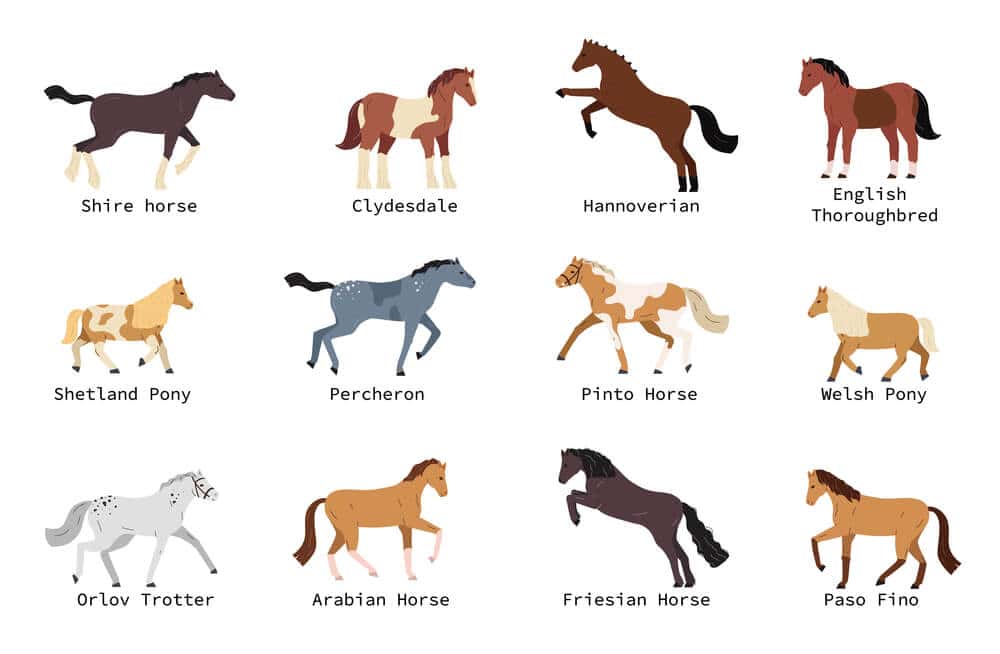
The “I” is for the Icelandic Horse, a smaller breed with a big heart, known for its unique tölt gait and being a great horse for rugged terrain.
“J” brings us to the Jutland horse, a Danish breed known for its strength and calm demeanor, making it one of the great workhorses, especially in agricultural settings.
For “K,” the Kentucky Mountain Saddle Horse shines as an American breed prized for its smooth gaits and good temperament, making it a suitable choice for leisurely trail riding and showing.
“L” leads us to the Lusitano, a Portuguese breed that is a close relative of the Spanish Andalusian. This elegant horse is known for its prowess in classical dressage and bullfighting, showcasing its versatility as a great riding horse.
“M” introduces the Massachusetts Equine Clinic’s often-seen breed, the Morgan horse. This American breed is known for its versatility, serving as a family horse, a show horse, and even in therapeutic riding programs.
The letter “N” nods to the Norwegian Fjord, one of the world’s oldest and purest breeds. With a distinctive dun coat and black points, this stocky breed is a versatile horse used for everything from farming to therapeutic riding.
“O” is for the Oldenburg, a German warmblood known for its success as a racehorse and an excellent dressage horse. Its size and power make it a popular choice amongst competitive riders.
“P” presents the Pony of the Americas, a pony breed with Appaloosa coloring, suitable for children and small adults. With an average height that classifies them among pony breeds, they are often seen in various equestrian disciplines.
“Q” is for the Quarter Horse, arguably one of the most popular horse breeds in the United States. Renowned for its sprinting capabilities in quarter-mile races, this breed is also a staple in rodeos, horse shows, and as a reliable ranch horse.
“R” brings us to the Racking Horse, celebrated for its smooth, natural gait, making it an excellent riding horse, particularly in the Southern United States where it is often showcased in competitions.
“S” stands for the Shetland Ponies, one of the smallest pony breeds, but don’t let their size fool you; they are as strong as they are charming and have been used as work horses in their native Shetland Islands for a long time.
“T” introduces the Tennessee Walking Horse, a breed known for its unique running walk and gentle nature. This breed is a popular choice for trail riding and shows due to its smooth gaits and friendly disposition.
“U” uncovers the Ukrainian Riding Horse, a lesser-known but versatile breed that excels in show jumping and dressage. With a good temperament and solid build, they’re gaining popularity among riders looking for an all-around excellent riding horse.
“V” brings us to the Virginia Highlander, a sturdy and smaller breed that’s often a perfect horse for children and smaller adults. They’re known for their friendly nature and adaptability to various equestrian activities.
“W” is for the Welsh Pony and Cob, a breed that comes in various sizes to suit many riders. They are great horses for both children and adults and participate in a range of disciplines, from harness racing to eventing.
“X” marks the Xinjiang Horse, a Chinese breed known for its endurance and ability to thrive in harsh conditions. While not as common in the competitive scene, they are a solid choice for long-distance trail riding. Here are some great Chinese horse names you may like to read!
“Y” yields the Yakutian Horse, a hardy breed from the Siberian region of Yakutia. This breed is well-adapted to cold climates and is used for both riding and light draft work, showcasing its versatility.
“Z” zeroes in on the Zangersheide, a Belgian breed developed for show jumping. They are a powerful breed, bred specifically to excel in the sport, and are recognized for their athleticism and jumping ability.
Each of these different breeds of horses brings something special to the equestrian world. Whether it’s the Tennessee Walking Horse’s smooth gait, the British Riding Pony’s suitability for young riders, or the American Bashkir Curly’s hypoallergenic coat, horse lovers can find the perfect horse to match their riding style and preferences.
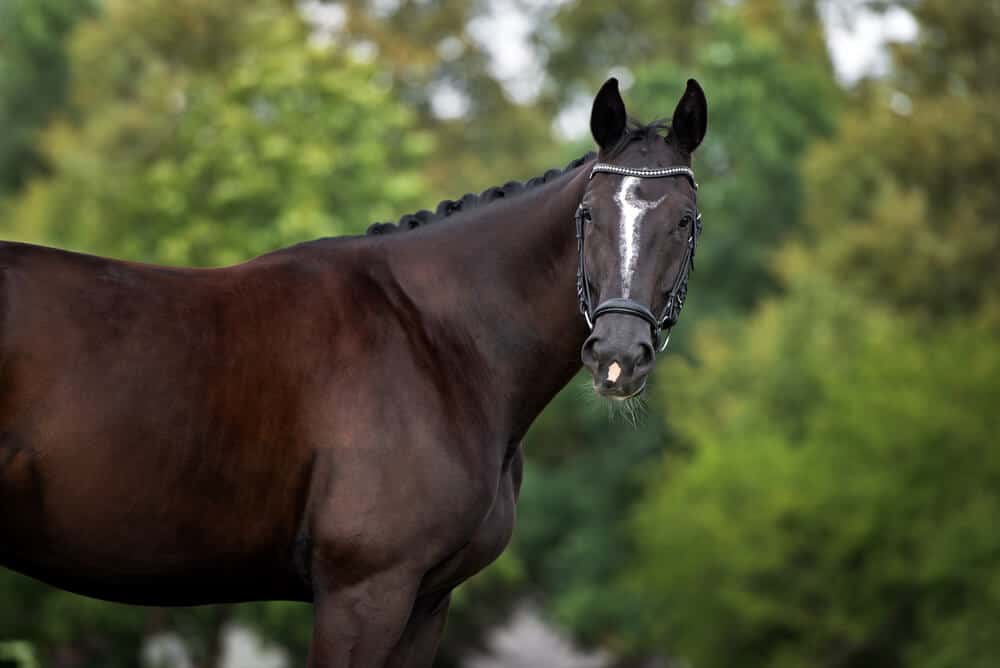
A-Z List of Horse Breeds Roundup – Quick Guide
Here is my roundup of different horse breeds from A-Z. Let’s start with A for the Arabian horse, renowned for being a beautiful horse and its endurance. Then we end up at Z for the Zaniskari Pony a small mountain pony from Ladakh in northern India. Renowned for being bred at higher altitudes where they are used as workhorses.
- A: Arabian, Andalusian, American Quarter Horse
- B: Belgian, Barb, Budenny
- C: Clydesdale, Connemara Pony, Canadian Horse
- D: Dartmoor Pony, Danish Warmblood, Dales Pony
- E: Exmoor Pony, Estonian Horse, Egyptian Arabian
- F: Friesian, Fell Pony, French Trotter
- G: Gypsy Vanner, Groningen Horse, German Riding Pony
- H: Haflinger, Hanoverian, Highland Pony
- I: Irish Draught, Icelandic Horse, Italian Heavy Draft
- J: Jutland, Java Pony, Jaca Navarra
- K: Knabstrupper, Kyrgyz Horse, Kathiawari
- L: Lipizzan, Lusitano, Latvian Horse
- M: Morgan, Mustang, Marwari
- N: Norwegian Fjord, New Forest Pony, Nokota Horse
- O: Oldenburg, Orlov Trotter, Oberlander Horse
- P: Paint Horse, Percheron, Paso Fino
- Q: Quarter Pony, Quarab, Qatgani
- R: Racking Horse, Russian Don, Rocky Mountain Horse
- S: Shetland Pony, Selle Français, Shire
- T: Tennessee Walker, Thoroughbred, Trakehner
- U: Ukrainian Riding Horse, Uzunyayla, Uphill
- V: Vladimir Heavy Draft, Vyatka, Ventasso Horse
- W: Welsh Pony, Westphalian, Wielkopolski
- X: Xilingol Horse, Xenophon Horse, Xanthus
- Y: Yakutian Horse, Yonaguni, Yorkshire Coach Horse
- Z: Zangersheide, Zweibrücker, Zaniskari Pony
Try Out Our Horse Breed Finder!
What is your favourite breed of horse? I would love to know in the comments below!
Frequently Asked Questions
Which rare equine breeds are on the brink of extinction?
At the brink of extinction are breeds like the Suffolk Punch, known for its chestnut coat, and the Cleveland Bay, with its rich history in England. They’re heritage breeds that require conservation efforts to ensure their survival.
Which equines are known as the top ten for their spirited temperament?
Breeds such as the Arabian, Thoroughbred, and Akhal-Teke stand out for their fiery temperaments. They’ve historically been bred for endurance and speed, resulting in their spirited nature.
Can you name some spotted breeds that are prancing stars in the equine world?
The Appaloosa and Knabstrupper are renowned for their spotted coats and often impress in the show ring. Their distinctive patterns make them easily recognisable and prancing stars in the equine world.
Could you list horse breeds that fabulously start with the letter C?
Certainly! The Connemara, a dexterous pony from Ireland, and the Clydesdale, the gentle giant from Scotland, are notable breeds starting with ‘C’. The Cob, known for its robust build in England, also shares this initial.
What are the most cherished small equine breeds trotting across the globe?
The Shetland Pony, adored for its diminutive stature and resilience, and the Welsh Pony, hailed for its versatility and charm, are among the most cherished small equine breeds globally.
How many recognised breeds grace the equine universe today?
Currently, there are over 350 recognised horse breeds, each displaying a mosaic of colours, patterns, and attributes that contribute to the rich tapestry of the equine universe.
Are there any rare or endangered horse breeds included in the Horse Breeds A-Z?
Yes, Horse Breeds A-Z includes information on rare and endangered horse breeds. These breeds may have low population numbers due to various factors such as habitat loss, changes in agricultural practices, or lack of breeding programs. Examples include the Akhal-Teke, known for its metallic sheen and endurance, and the Caspian Horse, which is one of the oldest and smallest horse breeds in the world.
Is there a significant difference between horse breeds in different countries?
Yes, horse breeds can vary significantly between countries due to historical breeding practices, climate adaptation, and the purposes for which the breeds were developed. For example, breeds from colder climates like the Icelandic Horse have unique features that allow them to thrive in harsh conditions, while breeds from warmer regions like the Arabian are known for their endurance and heat tolerance.
Do Horse Breeds A-Z lists include crossbreed or hybrid horses?
Typically, Horse Breed A-Z lists focus on purebred horses recognized by official breed registries. However, some guides may include information on popular crossbreeds or hybrids, especially if they are well-known or have a significant presence in the equestrian community.