
The Lipizzaner horse, with its striking baroque appearance and graceful movement, has become one of Europe’s most distinguished breeds. Breeders within the Habsburg Empire developed the muscular, intelligent, and long-lived Lipizzaner horses during the sixteenth century. Historically, royal courts and the aristocracy have maintained a close association with Lipizzaners, frequently regarding them as symbols of imperial power and prestige.
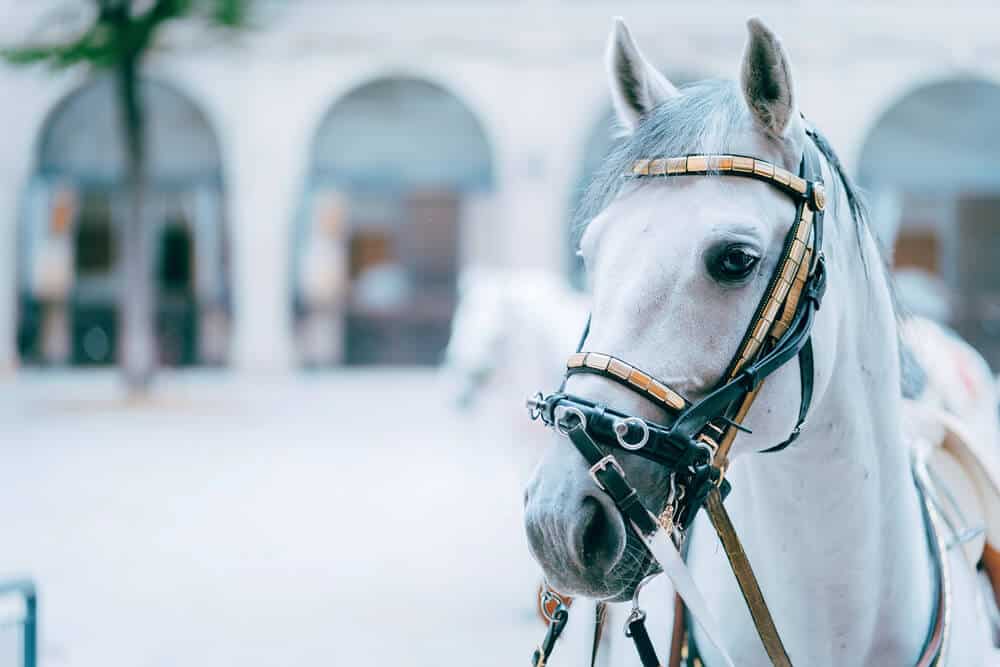
These horses have gained worldwide fame not only for their historical significance and beauty but also for their exceptional abilities in dressage. The Spanish Riding School in Vienna showcases their talents, where Lipizzaners perform highly precise and artistic movements that have captivated audiences for centuries. Their performances highlight an enduring legacy that crosses borders and continues to enchant horse enthusiasts and the general public alike.
Despite their traditional roots, Lipizzaners remain a living testament to equine agility and elegance. They are an integral part of European cultural heritage, embodying a blend of Spanish, Arabian, and Berber ancestry. Although their numbers are not as large as more common breeds, the Lipizzaner’s reputation has reached far and wide, ensuring these majestic animals are celebrated and preserved for future generations.
History of Lipizzaner Horses
Lipizzaner horses, with their majestic bearing and strong association with the Spanish Riding School, boast a storied past that weaves through European history, from their regal origins to their protection during global conflicts.
Origins and the Spanish Riding School
The Lipizzaner breed traces its roots back to the 16th century when the Habsburg monarchy sought to create a distinguished horse for the royal court. Originating from Spanish, Arabian, and Berber bloodlines, these horses were refined over many generations. The Spanish Riding School, founded in 1572 in Vienna, became the nucleus of the Lipizzaner’s development, known for classical dressage and the preservation of purity in the breed. The establishment dedicated to the art of riding and horsemanship still stands today as a living testament to the breed’s history.
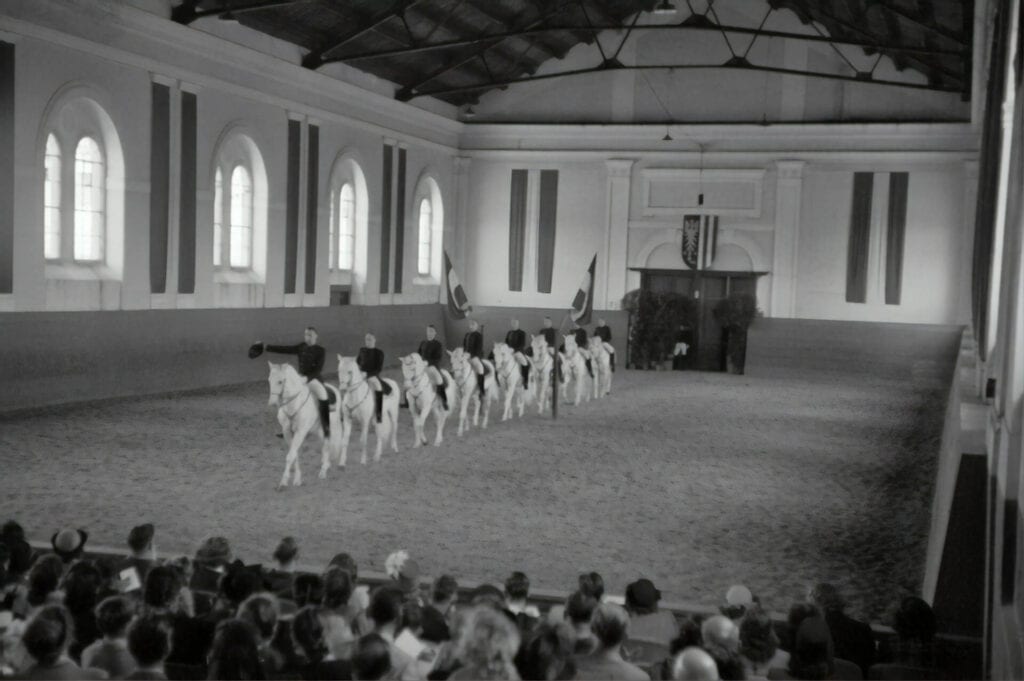
Photo by Austrian National Library on Unsplash
Role of Archduke Charles
Archduke Charles of Austria, a significant figure in the breed’s history, established the famous stud farm at Lipizza (now Lipica, Slovenia) in the late 16th century. His efforts in selective breeding bolstered the stature of Lipizzaners, focusing on characteristics like strength and a calm temperament suitable for both riding and use in military.
World War II and the Rescue Operation
During World War II, the Lipizzaner breed faced a perilous future as conflict spread across Europe. The breed’s survival became a focal point in 1945 with the “Miracle of the White Stallions”: a rescue operation led by Colonel Charles Reed of the US Army, to evacuate and protect the Lipizzaners amid the chaos of war. Thanks to these efforts, the breed was preserved for future generations, maintaining the cultural legacy attached to these esteemed horses.
Breed Characteristics
The beautiful Lipizzan breed, which is renowned for its majestic appearance and royal legacy, displays distinct characteristics that have been preserved over centuries. These horses are famous for their muscular build, noble movements, and longevity.
Physical Appearance
Lipizzans are known for their robust and muscular frame, which contributes to their strong presence. Typical characteristics include:
- Height: Ranges from 14.2 to 15.2 hands high.
- Build: Compact, with a pronounced wither, a long back, and a strong hindquarter.
- They often have a distinctive Roman nose and dark eyes, adding to their noble expression.
Temperament
Personality traits of the Lipizzan breed are:
- Intelligence: They are highly intelligent and easy to train.
- Disposition: Known for a gentle and willing temperament, they excel in performance and dressage.
Coat Colour Development
One of the most intriguing aspects of Lipizzaners is their coat colour transformation:
- Foal Coat: They are born with a dark coat (black-brown, dark brown, or mouse-grey).
- Ageing: Over time, usually by the age of 6 to 10 years, their coat lightens to a white or grey shade. Hence, most adult Lipizzans appear as white horses.

Lipizzaner Training and Performance
Lipizzaner horses are renowned for their impressive training regimen and performances, exemplifying the highest standards of classical dressage. The Spanish Riding School in Vienna is the heart of this tradition, where these horses demonstrate precision, agility, and a storied history.
Classical Dressage Foundations
The Lipizzaner’s training is grounded in classical dressage, which fosters harmony between horse and rider. The Spanish Riding School in Vienna has been a custodian of this heritage, refining the techniques that enhance the natural movements of Spanish horses, particularly stallions. The young stallions, often still grey, are methodically trained to develop balance and build a strong foundation for advanced exercises.
High School Movements
At the peak of classical riding, Lipizzaner stallions perform “High School” movements, also known as haute école. This includes sophisticated manoeuvres like the airs above the ground, where horses execute leaps and kicks that have historical roots in military defence tactics. The fully trained school stallions, known as the “white stars”, showcase their mastery in the Winter Riding School’s baroque setting.

Photo by K. Mitch Hodge on Unsplash
International Performances
The Lipizzaner horses have gained international acclaim, enchanting audiences worldwide with their performances. They exhibit classical school steps and movements, such as pas de deux, and are celebrated for their precision and elegance. These international performances not only display the outcome of rigorous training but also serve to perpetuate the legacy of classical dressage and its relevance in contemporary equestrian arts.
Conservation and Breeding
The conservation and breeding of Lipizzaner horses are critical in maintaining the purity and qualities of this historic breed. Preservation efforts are centred around stud farms, selective breeding practices, and the global management of the breed.
Stud Farms and their Role
Stud farms play a pivotal role in the conservation of Lipizzaner horses. These establishments, such as the renowned Lipica Stud Farm near the Adriatic Sea, are responsible for maintaining pure bloodlines. They keep detailed studbooks and follow prescribed breeding programmes to ensure the genetic diversity and health of the Lipizzan population. The Lipica Stud Farm, being the original stud farm of the Lipizzan breed, is particularly significant. It holds the foundational studbook for the breed and sets the standards for breeding practices.
Breeding for Quality and Preservation
Breeding practices are focused on both the preservation of the breed’s qualities and the enhancement of their traits. Such as their powerful build and splendid muscularity. The aim is to maintain the historical conformation and the inherent traits that make Lipizzaner horses exceptional performers in classical dressage. Breeders give special attention to ensuring the horses mature correctly, as Lipizzaners are known to develop slowly and live long lives. The Lipizzaner stallion, renowned for its noble carriage and agility, plays a pivotal role in breeding programs. Aimed at preserving the pure lineage and classical traits of this historic breed.
Global Distribution of Lipizzaners
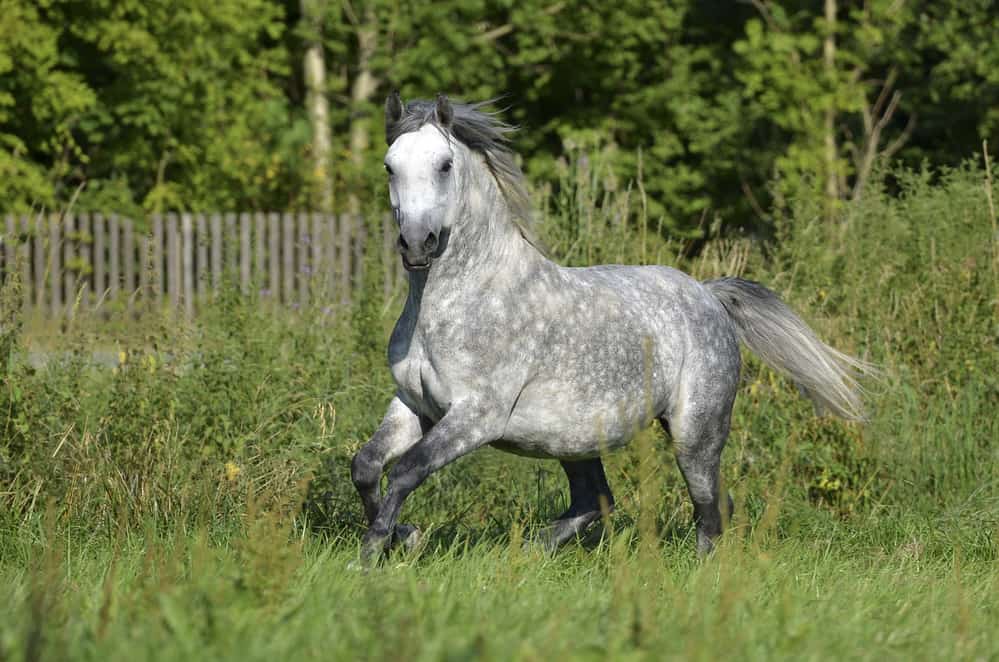
From their origins in Europe, Lipizzaners have spread across the globe, including to the United States. Here they continue to be bred and valued for their grace and power. The dedicated breeders and specialists ensure that these powerful horses thrive worldwide, upholding the standards set by European stud farms. The global distribution also helps to secure the breed against regional threats, making the conservation effort a collaborative international endeavour.
Key Features of the Lipizzan
Here’s a table outlining some key features of Lipizzaner horses:
| Feature | Description |
|---|---|
| Breed | Lipizzaner (also known as Lipizzan or Lipizzaner-Baroque) |
| Origin | Developed in the 16th century in the Habsburg monarchy, now Austria |
| Coat Color | Predominantly white, although some individuals may be gray or black |
| Height | Typically between 14.2 to 15.2 hands (58 to 62 inches) at the withers |
| Body Type | Compact and muscular, with a well-arched neck and powerful hindquarters |
| Head | Refined with a straight or slightly convex profile, expressive eyes |
| Mane and Tail | Long, flowing mane and tail, often kept natural without trimming |
| Legs | Strong and well-built, with well-defined joints and hooves |
| Temperament | Intelligent, willing, and trainable, known for their gentle disposition |
| Gait | Smooth and elegant movement, capable of performing highly collected gaits |
| Uses | Classical dressage, haute école performances, driving, and pleasure riding |
| Lifespan | Typically 25 to 30 years, but can live longer with proper care |
| Cultural Significance | Recognized as a symbol of classical horsemanship and Austrian heritage |
This table briefly overviews the distinctive features and characteristics of Lipizzaner horses in one place!
I hope you have found everything you’d ever want to know about the striking Lipizzaner horse! Is there anything you would like to add?