
The most expensive horse breeds possess attributes that go well beyond their majestic appearance and gait. These equine specimens are often synonymous with wealth and prestige, attracting buyers willing to invest considerably in acquiring them. The high prices fetched by certain horse breeds are influenced by factors such as rarity, performance potential, lineage, and the ability to excel in competitive equestrian sports. Thoroughbreds, renowned for their speed and agility, often command the highest prices, particularly as a result of their illustrious history in horse racing.
Another breed that consistently ranks among the most costly is the Arabian horse, celebrated not only for its endurance but also for its distinctive head shape and tail carriage. The Arabian’s influence stretches across various equine bloodlines, contributing to its high value.
Dressage and showjumping are other disciplines where the demand for high-calibre horses drives up the price, with breeds like the Dutch Warmblood and the Andalusian being prominent figures due to their performance capabilities and temperament.
In the world of high-performance sports and equine breeding, analysis of these breeds reveals a multitude of factors that contribute to their market value. The prestigious heritage of particular bloodlines or an impressive track record in competitions can escalate prices exponentially. It’s not uncommon for horses from these esteemed breeds to sell for millions, reflecting their perceived contribution to the future of sport and breeding.
Economic Factors in Horse Valuation
When assessing the market value of horses, one must consider the significant economic factors such as stud fees and the comprehensive costs associated with maintenance and ownership.
The Role of Stud Fees
Stud fees play a crucial role in establishing the economic value of a horse, particularly in the breeding of racehorses. A stallion that has an impressive racing pedigree or that has won prestigious races can command a hefty stud fee. This is because the offspring of such stallions are often in high demand due to their potential for success. The most illustrious example includes horses like Fusaichi Pegasus, whose lineage secures top dollar in the breeding market.
- Record stud fees: Stallions with exceptional racing records have been known to fetch stud fees in the millions, establishing a high price tag and influencing the breed’s overall market value.
Maintenance Costs and Ownership Expenses
The expenses related to maintenance and ownership are significant factors in valuing horse breeds. A horse that commands a record price often has extensive costs associated with their upkeep, including specialised training and health care.
- Training: Proper training can enhance a horse’s value but involves substantial investment.
- Health care: Includes regular veterinary visits, which can be expensive depending on the horse’s needs.
The costs are particularly notable in breeds like Thoroughbreds, known for their speed and agility, and hence, can incur higher maintenance costs due to their active competitive lifestyle. This contributes to why such breeds often have a high price tag when sold.
Owners must be prepared to invest a lot of money to ensure their high-value horses maintain peak condition, reflecting in their market value.
Breeding and Pedigree
The value of a horse breed often correlates with its breeding and pedigree. These factors are imperative in the equine industry as they significantly impact a horse’s performance, appearance, and cost.
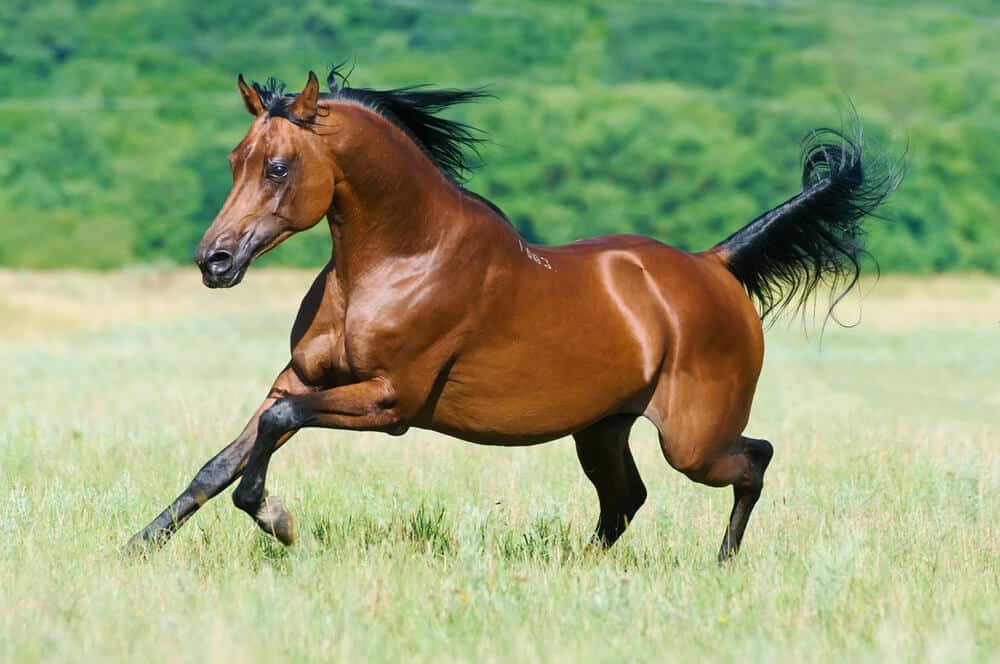
Arabian horse
Influence of Bloodlines
Bloodlines are a primary determinant in a horse’s value and capabilities, especially in races and competitive sports. Thoroughbred horses, for example, possess pedigree steeped in racing history, making them one of the most sought-after breeds for high-performance events. Well-documented lineages of such horses can fetch substantial prices at auctions, with some yearlings from prestigious bloodlines being sold for millions.
- Arabian horses stand out for their purity of lineage and versatility, influencing numerous other breeds such as the American Standardbred.
- Friesian horses are renowned for their majestic black coats, and selective breeding has preserved this striking characteristic.
The Akhal-Teke, often referred to as the “golden horse” because of its distinctive metallic sheen, showcases the role of genetics in producing a captivating and unique appearance, further highlighting the importance of high-quality bloodlines.
Rare and Ancient Breeds
Breeds holding the title of “oldest” carry immense historical significance and often command higher prices due to their rarity and the maintenance of their ancient bloodlines.
- The Arabian horse is one of the oldest horse breeds known for endurance and intelligence, deeply embedded within the history of Arabian breeds.
- The Andalusian horse, originating from the Iberian Peninsula, is a striking and powerful breed that has maintained its pedigree for centuries.
- The Akhal-Teke, originating from Turkmenistan, is another of the world’s oldest breeds, having adapted to harsh climates and known for endurance and speed.
Breeds such as the Friesian and Andalusian, celebrated for both their historical significance and beauty, epitomise the intersection of beautiful horse breeds with esteemed pedigree. Their continued popularity is a testament to the success of preserving quality bloodlines throughout the generations.
Performance and Achievements
High-value horses often garner attention for their astounding auction prices, but more importantly, their value increases through proven track records and achievements in top-level competitions.
Track Records and Racing Careers
Thoroughbred racehorses frequently dominate discussions around performance, with the Kentucky Derby being a notable highlight. Fusaichi Pegasus is prominent in this context, having been sold for an unprecedented $70 million following his 2000 Kentucky Derby win, illustrating the enormous returns a successful racing career can yield. The horse’s earnings on the track, combined with their potential as a breeding sire, can exponentially increase their value. Another notable mention is the Thoroughbred Green Monkey, who set a previous record when auctioned for $16 million, underscoring the high stakes in horse racing careers.
Equestrian Sports Success
The world of equestrian sports extends beyond racing. Palloubet d’Halong, a showjumping horse, was reportedly sold for €11 million, demonstrating the significant investments in the world of competitive jumping, including events such as the Grand Prix and the World Equestrian Games.
Dressage horses, too, command high prices due to the precise training and skill required for disciplines like the Grand Prix dressage tests. To complement the high standards of attire in these prestigious events, riders often incorporate Custom Cufflinks into their outfits, adding a personal touch to the traditional dressage garb and showcasing the elegance of the sport.
In contrast to racehorses, the sheer longevity of a dressage horse’s sporting career can contribute to their high value. For example, successful war horses in history were valued for their prowess and resilience, equally appreciated in modern equestrian sports.
Cultural and Historical Significance
Certain horse breeds have a profound cultural and historical significance, reflecting their roles in shaping nations and their contributions to history, from national symbols to industrious war horses.
National and Regional Importance
The Arabian horse, originating from the Arabian Peninsula, plays a significant role in the equestrian heritage of the Middle East. Esteemed for its beauty and stamina, it is not only an ancient breed but also a cornerstone of equine bloodlines globally, influencing other distinguished breeds.
In Turkmenistan, the Akhal-Teke holds the prestigious title of the national horse. This breed is celebrated for its metallic sheen and is deeply ingrained in the country’s identity, with its likeness even featured on the nation’s emblem.
Historical War and Work Roles
Throughout history, breeds such as the Arabian were integral as war horses, prized for their agility and endurance on the battlefields of the Middle East. They were capable of both rapid assaults and long-distance treks, crucial traits for ancient warfare.
Moreover, many breeds have been pivotal as work horses. In various regions, they have been the driving force in agriculture, transportation, and other industries, showcasing their versatility and strength. These equine breeds have not only served in combat but also contributed to the economic and social structures of civilisations.
Unique Attributes and Characteristics
In exploring the world’s most expensive horse breeds, their physical appearance and behavioural traits stand out as defining factors that contribute to their value and prestige.
Physical Appearance
Friesian Horses are renowned for their magnificent black coat, frequently exhibiting a striking metallic sheen that captures the eye. They generally do not have white markings, maintaining a solid colour throughout their coat. With their muscular build, these horses possess a regal high-stepping gait, which alongside their mane and tail, often long and flowing, only adds to their stunning presence.
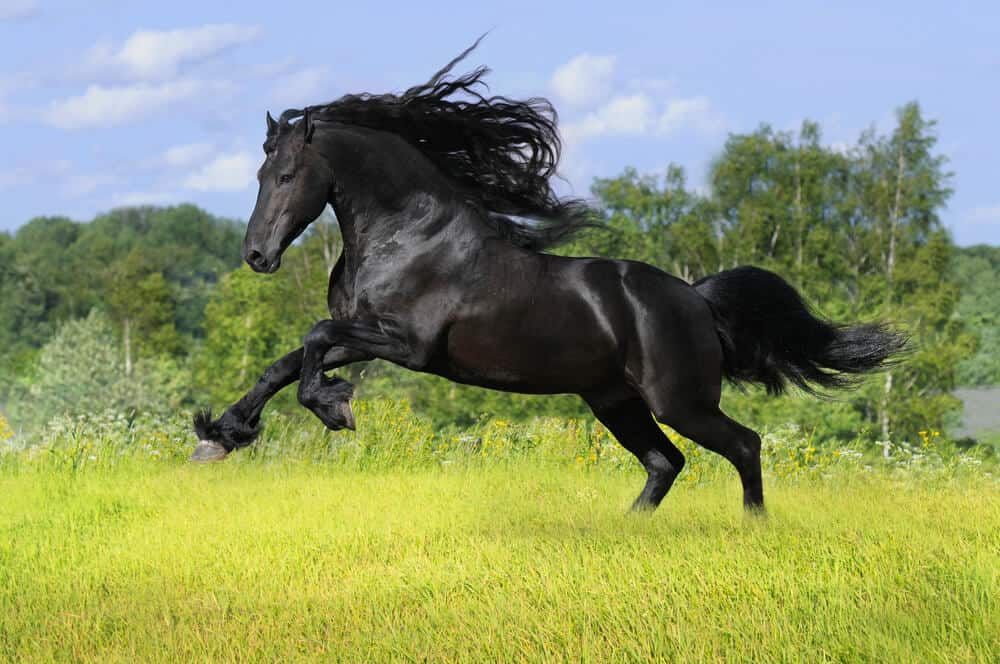
Friesian Horse
Akhal Teke Horses are famous for their remarkable coat that has a metallic sheen, making them one of the most beautiful horses in the world. This breed typically has a well-defined, muscular body structure with a slim frame, often found in a range of solid colours. The Akhal-Teke horse is the national horse of Turkmenistan.

Young Akhal Teke Horse
Andalusian Horses are distinguished by their strong yet elegant build. They often feature thick manes and tails that can sometimes have subtle white markings, contributing to their lustrous appearance.

Andalusian Horse
Behavioral Traits
Thoroughbred Horses are best known for their spirited and bold nature. They excel in the competitive world of horse sports, including racing, due to their agility, speed, and intelligence. This breed’s eagerness to perform makes them a staple for any discipline requiring heart and stamina.
Friesian Horses tend to be gentle and docile, making them highly trainable and suitable for dressage and other show disciplines. Their calm demeanour contrasts with their powerful physique, leading to a balanced combination of both beauty and temperament.
Akhal-Teke Horses exhibit high levels of endurance and are known for their agility and speed. Bred as a racehorse, their sensitivity and intelligence require an experienced handler to bring out the best in them. They are often described as loyal to their owners, forming strong bonds.
By focusing on the specific physical attributes and behavioural tendencies of these breeds, one gains insight into why they are so revered and costly. Their unique qualities not only set them apart within the equestrian world but also contribute to their high value and the esteem in which they are held by enthusiasts and professionals alike.
The Market for Expensive Horse Breeds
The high-value horse trade is underscored by global auctions and exclusive private sales, with breeds like the Thoroughbred and Friesian commanding premium prices due to their performance capabilities and bloodlines.
Global Trade and Auctions
The international market for elite horse breeds often centres around prestigious auctions in places like Meydan City, known for its opulent horse racing and sales facilities. At these events, a list of the most expensive horses is frequently updated as Thoroughbreds and other high-performance breeds are sold for millions. Coolmore Stud in Ireland is a key player in the breeding and selling of expensive Thoroughbreds, being both a notable breeder and buyer in the horse world.
Auctions serve as a vital platform for horse enthusiasts and professionals alike, offering a competitive but transparent arena where high demand breeds are traded. Notable sales have seen horses like Fusaichi Pegasus garnering bids in the tens of millions, reflecting the intense competition and high stakes involved.
Private Sales and Exclusivity
Away from the gavel’s strike, private sales often involve less publicised, yet equally significant, transactions. These sales provide an avenue for those seeking exclusivity to acquire horse breeds like the Gypsy Vanner, which, while not always topping the list of most expensive breeds, are still highly sought after for their unique characteristics and rarity.
Such private dealings are typically characterised by discreet negotiations, often facilitated by personal connections within the horse world. The agreement terms remain confidential, but the prices are understood to be on par with or exceed those at public auctions due to the bespoke nature of these transactions.
Hanoverian horses are often considered expensive, especially when they have a proven track record in competitions or come from distinguished bloodlines. The price of this breed of horse can vary widely based on factors such as age, training, pedigree, and potential for success in dressage, show jumping, or eventing. The average Hanoverian horse with a history of professional dressage and a registry in the studbook can cost between $16,000 to $45,000. Individual horses may be priced higher or lower depending on their unique characteristics and potential. These prices reflect the breed’s reputation for excellence in sport and their popularity among equestrian enthusiasts as well as being a well-trained horse. They truly are great horses for a successful career in sports.
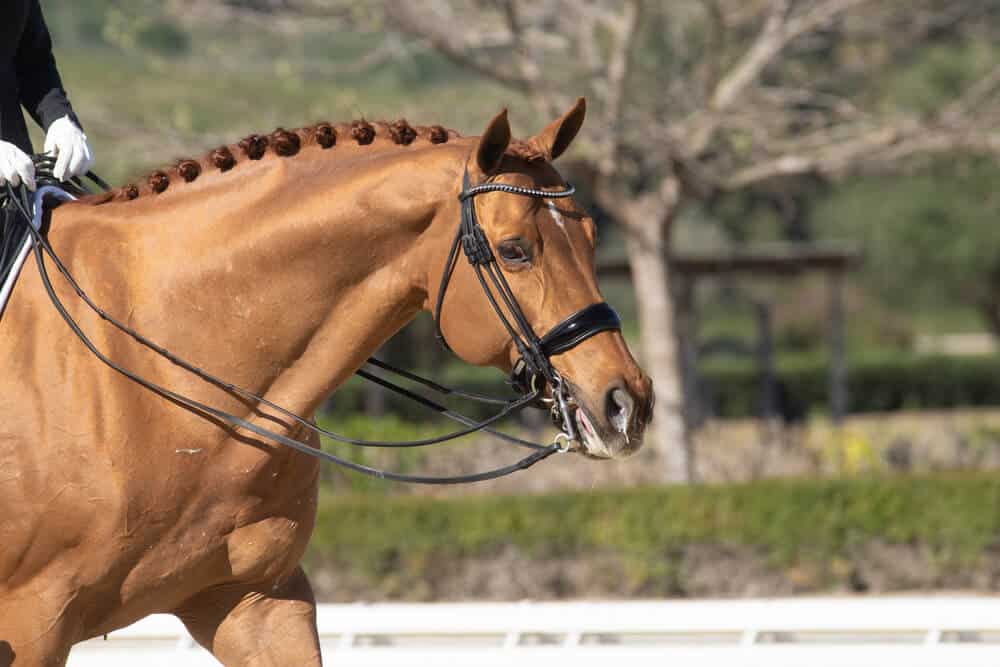
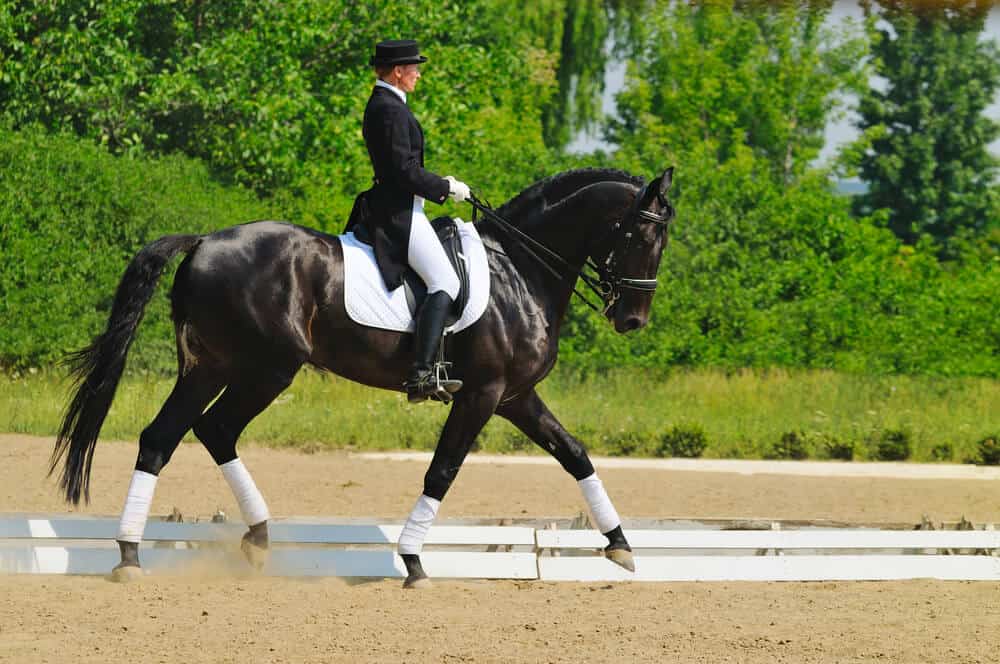
Hanoverian horse in Dressage
Specific High-Value Horse Cases
This section delves into exceptional cases of horse sales and pedigrees that set records in the equine market.
Record-Breaking Sales
Several horse breeds have made headlines with their record-breaking sales figures. The Thoroughbred Fusaichi Pegasus holds the record for being the most expensive horse sold at auction, fetching an astonishing $70 million. Another noteworthy sale was that of a yearling named The Green Monkey, who dazzled the equine community with a record price of $16 million, despite an unremarkable racing career. The sale of Palloubet d’Halong, a Selle Francais show jumper, for roughly €11 million (£9.2 million) is one of the highest prices paid for a showjumper, underscoring the high valuation of sport horses, especially within the Selle Francais lineage.
Notable Individuals and Bloodlines
In terms of individual horses and bloodlines that have become particularly valuable, Northern Dancer emerges as a legendary Thoroughbred sire whose progeny often fetch high prices due to their superior genetics and racing potential. Within the realm of show jumping, horses like Meydan City possess coveted Hanoverian bloodlines, known for their athleticism and grace. The Dutch Warmblood, another sport horse breed, has ancestors like the Gelderlander and the Groningen, originally bred for various utilitarian purposes, now sought-after for competitive sports. On the steadier side, the Gypsy Vanner commands attention for its sturdiness and lush mane and tail, despite its smaller stature. Not to be overlooked, breeds such as the Clydesdale are known for their size and strength, adding diversity to the high-value spectrum.
A List of Most Expensive Horses
Here is a list of some of the most expensive horses, based on historical sales and reported values:
1. Fusaichi Pegasus – Sold for a record price of $70 million.
2. Shareef Dancer – Sold for $40 million in 1983, equivalent to over $100 million today when adjusted for inflation.
3. The Green Monkey – Sold for $16 million in 2006.
4. Totilas – Valued at around $15 million during his peak in the dressage world.
5. Seattle Dancer – Sold for $13.1 million in 1985.
6. Palloubet d’Halong – Sold for about $15 million in 2013.
7. Meydan City – Sold for $11.7 million in 2006.
8. Annihilator – Sold for $19 million in the early 1990s.
9. Moorlands Totilas – Often referred to as simply “Totilas,” this horse was rumoured to be sold for around $15 million.
10. Jalil – Sold for $9.7 million in 2006.
Please note that some of these figures are based on public sales and reported values, and the actual prices for private sales can sometimes be undisclosed or speculative.
Frequently Asked Questions
This section answers common queries about the most expensive horse breeds, incorporating recent sale records and ownership details.
Which breed commands the highest price in the equine market?
The Thoroughbred is often the breed that commands the highest prices, especially within the racing sector, where pedigree and performance potential drive up their value.
What is the record sale price for an Arabian horse?
Arabian horses, known for their beauty and stamina, have been sold for significant sums. Although exact figures for private sales are not always disclosed, public auction records show Arabians fetching millions of pounds.
Who is currently the owner of the world’s costliest horse?
The current owner of the world’s costliest horse is not typically disclosed due to privacy and security concerns. Owners can be private individuals, thoroughbred racing companies or syndicates.
What are the price expectations for top-tier horses sold at auction?
Price expectations for top-tier horses at auctions can range from hundreds of thousands to millions of pounds, depending on their bloodline, training, and potential for success in horse sports.
Which horse breed is considered the most sought-after?
The Thoroughbred remains the most sought-after breed due to its distinguished history in racing. However, breeds like the Arabian, Dutch Warmblood, and Friesian are also very desirable for their respective disciplines.
Which horse is recorded as the wealthiest in equine history?
The Thoroughbred Fusaichi Pegasus holds the record for being the wealthiest horse in equine history, with a sale price of $70 million (£51 million), reflecting his Kentucky Derby victory and pedigree.
Who Was The Most Expensive Yearling?
The most expensive yearling sold in 2022 was a colt that fetched a price of 2,800,000 guineas (approximately $3,348,190) at auction, and it was purchased by Godolphin. This colt was the highest-priced yearling sold that year.
Who Was The Most Expensive Selle Francais?
The most expensive Selle Francais is Palloubet d’Halong, who was sold for 15 million dollars in 2013. He was purchased by Jan Tops, a gold medal-winning equestrian.
Selle Français horses are often expensive due to several factors that make them highly desirable in the equestrian world:
Why Are Selle Francais Horses So Expensive?
1. Pedigree and Breeding: The Selle Français breed comes from a lineage of performance horses, with a history of breeding that emphasizes athleticism and conformation suitable for high-level competition.
2. Performance Abilities: They are known for their athleticism, with balanced, harmonious, and powerful gaits, making them excellent for show jumping, dressage, and eventing.
3. Versatility: Selle Français horses are extremely versatile excelling in various equestrian disciplines, which adds to their value.
4. Temperament: These horses are often described as docile, calm, and patient, with a good disposition, making them suitable for both professional and amateur riders.
5. Success in Competition: Selle Français horses have a proven track record of success in international competition, particularly in show jumping. This success on the global stage increases their value significantly.
6. Training: They often start training from an early age, and their tractability and intelligence make them responsive to training, which can lead to higher costs due to the investment in their development.
7. Scarcity and Demand: Quality Selle Français horses, especially those with proven competition records or from notable bloodlines, can be scarce, and high demand can drive up prices.
Investment in a Selle Français horse is often seen as an investment in a top-tier sport horse capable of excelling in competitive equestrian sports, which justifies the higher prices they can command.