

Picture a charming French cottage nestled in the countryside, surrounded by a riot of colourful blooms and fragrant herbs. That’s the essence of a French cottage garden – a delightful blend of beauty and practicality that’s been captivating gardeners for centuries.
French cottage gardens are all about embracing nature’s wild beauty while still maintaining a sense of order. Imagine meandering paths lined with lavender, roses climbing over weathered trellises, and cosy seating areas tucked away amongst the greenery. It’s a style that encourages exploration and relaxation, inviting you to slow down and savour the simple pleasures of garden life. In this blog post, I’m sharing with you everything you need to know about these gorgeous gardens and how you can create your own garden space.
Unlike their more formal French counterparts, cottage gardens have a relaxed, lived-in feel. They’re designed for enjoyment rather than show, with a mix of ornamental and edible plants growing side by side. Herbs like thyme, rosemary, and sage mingle with colourful perennials, creating a feast for both the eyes and the taste buds. It’s this charming blend of beauty and usefulness that makes French cottage gardens so irresistible.

History and Inspiration
French cottage gardens blend rustic charm with elegant design. They emerged from humble rural beginnings but evolved into a beloved style admired worldwide.
Roots in the French Countryside
Picture a quaint French village centuries ago. Cottagers grew veg and herbs for the pot, alongside fragrant flowers. These early gardens were practical yet pretty. Lavender, roses, and hollyhocks mingled with cabbages and beans.
As time passed, the style caught on. Wealthy folk fancied a taste of country life. They created larger, more elaborate versions on their estates. The rustic look became fashionable.
French cottage gardens often feature:
- Climbing roses on trellises and rose trees
- Gravel paths
- Weathered stone walls
- Herbs in terracotta pots
Comparison with English Cottage Gardens
While similar, French and English cottage gardens have distinct flavours. French gardens tend to be a bit more structured. They often include:
- Clipped box hedges
- Symmetrical layouts
- Formal elements like statues or fountains
English gardens, on the other hand, embrace a wilder look. They’re packed with flowers in a glorious muddle. Think cottagey classics like delphiniums and foxgloves.
Both styles share a love of abundance and colour. But French gardens nod to their nation’s formal gardening traditions. It’s like they’re wearing a beret and sipping wine!

Essential Design Elements
French cottage gardens blend structure with whimsical charm. They incorporate formal elements alongside more relaxed, natural features to create a harmonious and inviting outdoor space.
Geometric Shapes and Symmetry
Symmetry plays a key role in French cottage gardens. Think of it as nature’s way of showing off its best angles. Pathways often form neat grids or radiate from central points like spokes on a wheel. Circular or square planting beds add visual interest and help define different areas.
Parterres, those fancy geometric patterns made with low hedges, are a classic French touch. They’re like a living jigsaw puzzle for your garden. Pop some colourful flowers in the spaces between for a real eye-catcher.
Don’t go overboard, though. A bit of symmetry goes a long way. Mix it up with some wilder, more natural areas to keep things interesting.
Water Features as Focal Points
What’s a French garden without a splash of water? Fountains are the stars of the show here. They’re like nature’s own sound system, providing a soothing backdrop to your outdoor oasis.
Simple stone basins or ornate tiered fountains both work brilliantly. Place them at the intersection of paths or in the centre of a circular bed for maximum impact. Reflecting pools are another top choice, doubling the beauty of surrounding plants and statues.
Don’t forget about bird baths! They’re practical, pretty, and perfect for attracting feathered friends to your garden. Plus, they’re a doddle to maintain compared to larger water features.
Stone Elements and Old Stone Walls
Stone is the backbone of French cottage gardens. It’s like nature’s Lego, used to build everything from paths to walls. Old stone walls are gold dust if you’re lucky enough to have them. They add instant character and provide a perfect backdrop for climbing roses or ivy.
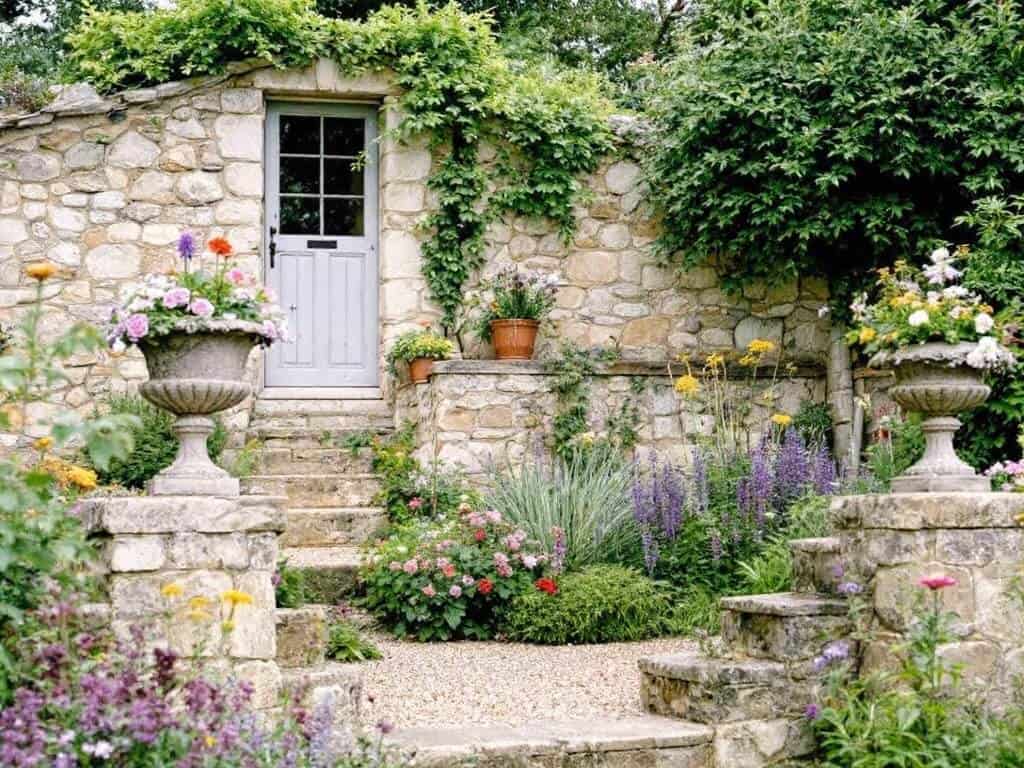
Gravel paths are a must. They crunch satisfyingly underfoot and help with drainage. Plus, they’re dead easy to maintain. Stone steps and terraces add levels and interest to your garden, making it feel larger and more varied.
Don’t shy away from decorative stone elements either. Urns, statues, and even old millstones can serve as charming focal points or plant stands.
Boxwood Hedges and Topiaries
Boxwood is the unsung hero of French cottage gardens. These evergreen shrubs are the ultimate in versatility. Use them to create neat borders, divide garden rooms, or shape into eye-catching topiaries.
Low boxwood hedges are brilliant for outlining beds and paths. They give structure to the garden year-round, even when other plants have gone to sleep for the winter. For a bit of fun, try your hand at topiary. Simple ball or cone shapes are easiest for beginners.
Remember, boxwood likes a trim now and then to keep it looking ship-shape. But don’t go too crazy – a slightly loose, natural look fits the cottage garden vibe perfectly.
Plant Selection
Picking the right plants is key to nailing that French cottage garden vibe. You’ll want a mix of classic favourites and some unexpected gems to really make your space sing.
Choosing Perennials and Evergreens
Perennials are the backbone of any French cottage garden. Lavender’s a must-have – it’s practically the poster child for that Provençal look. Pop in some fragrant roses too, they’ll give you blooms all summer long. Don’t forget about peonies; their fluffy flowers are a real showstopper.
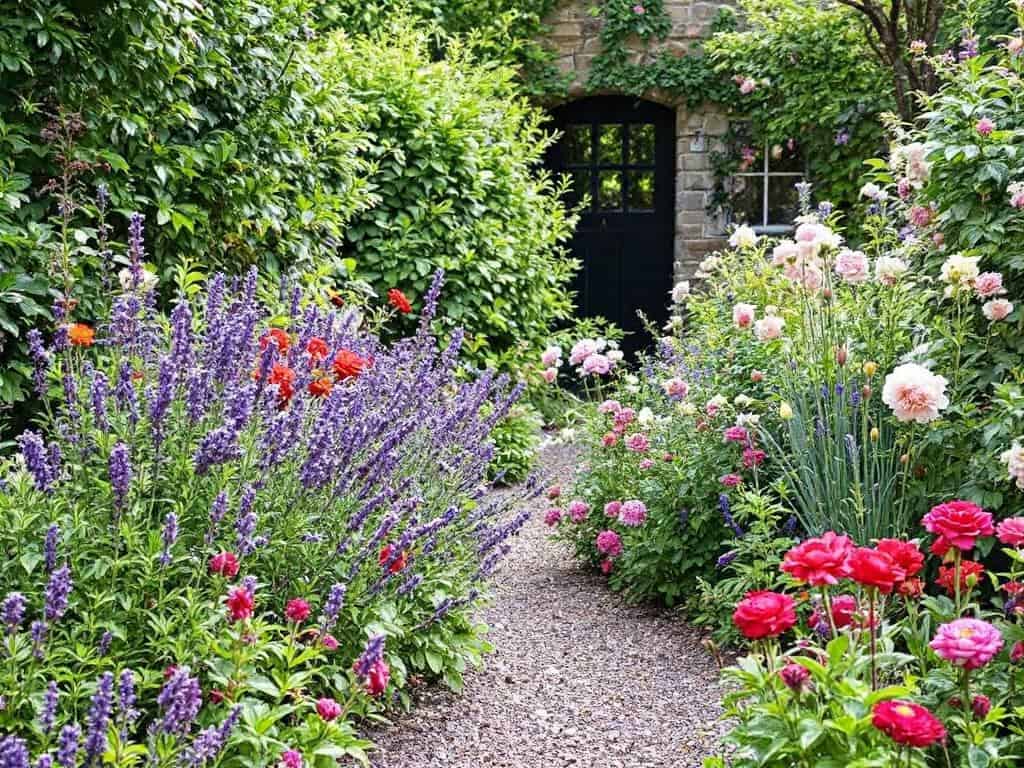
For evergreens, boxwood is your best mate. It’s perfect for creating those nifty little hedges and borders that French gardens are known for. Holly’s another good shout – it’ll keep things green even when winter rolls around.
Try mixing in some herbs like rosemary and thyme. They’re not just for cooking; they look fab and smell amazing too.
Integrating Large Trees and Shrubs
Big trees and shrubs give your garden structure and a bit of drama. Olive trees are spot on for that Mediterranean feel. They’re hardy little chaps and their silvery leaves look ace all year round.
Fancy some height? Wisteria’s your go-to. Let it climb up a pergola or arch – when it blooms, it’s like something out of a fairy tale. Cypress trees are another classic. They’re tall and slim, perfect for creating those formal French-style lines.

For a pop of colour, chuck in a few citrus trees. Lemon or orange trees in pots look dead posh and smell divine when they flower.
Highlights From French-Style Flora
French gardens are all about that romantic, slightly wild look. Delphiniums are brilliant for adding height and a splash of blue. Hollyhocks are another old-school favourite – they’ll give you that cottage charm in spades.
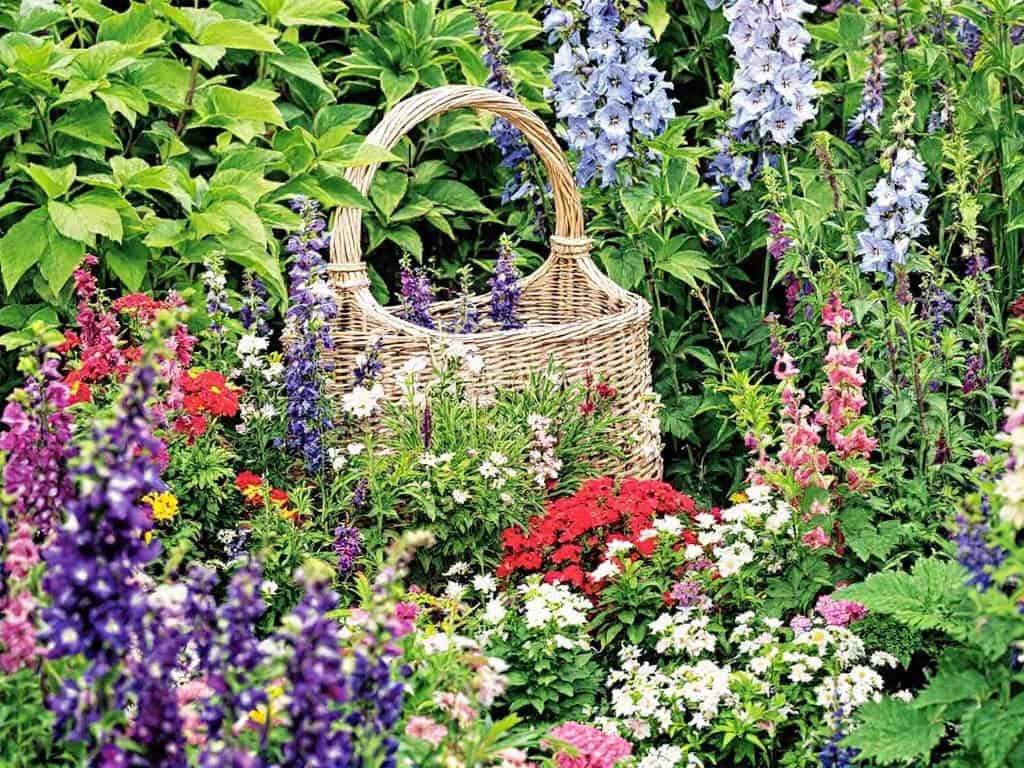
Foxgloves are ace for shady spots and they self-seed like nobody’s business. For ground cover, try some hardy geraniums. They’ll spread out nicely and give you loads of flowers.
Don’t forget about climbers. Climbing roses are a no-brainer, but clematis is fab too. It’ll scramble up walls and fences, giving you a riot of colour.
Plants and flowers commonly found in a French cottage garden:
A French cottage garden, also known as a jardin de campagne, combines informal design, lush planting, and charming rusticity. It often includes a mix of flowers, herbs, vegetables, and fruit trees. Here’s a list of plants and flowers commonly found in a French cottage garden:
Flowers
- Roses (especially climbing or old-fashioned varieties like Damask or Bourbon roses)
- Lavender (Lavandula angustifolia) – a quintessential French touch.
- Peonies (Paeonia) – romantic and lush blooms.
- Foxgloves (Digitalis) – tall and elegant for vertical interest.
- Delphiniums – striking spikes of blue, white, or purple.
- Hollyhocks (Alcea rosea) – tall, colorful cottage classics.
- Cosmos (Cosmos bipinnatus) – delicate and airy flowers.
- Sweet peas (Lathyrus odoratus) – climbing and fragrant.
- Cornflowers (Centaurea cyanus) – charming and vibrant blues.
- Poppies (Papaver) – particularly Oriental or opium varieties.
- Iris – especially bearded or Siberian varieties for classic elegance.
- Daisies (Leucanthemum vulgare) – cheerful and low-maintenance.
- Marigolds (Calendula officinalis) – sunny and useful as companion plants.
- Snapdragons (Antirrhinum) – bright and versatile.
- Hydrangeas (Hydrangea macrophylla) – for a burst of color and texture.
Herbs
- Thyme (Thymus vulgaris) – perfect for borders or pathways.
- Basil (Ocimum basilicum) – both ornamental and culinary.
- Chives (Allium schoenoprasum) – lovely purple blooms and useful in cooking.
- Sage (Salvia officinalis) – silvery foliage and purple flowers.
- Mint (Mentha) – best kept in pots to prevent spreading.
- Parsley (Petroselinum crispum) – doubles as an edging plant.
- Rosemary (Salvia rosmarinus) – aromatic and evergreen.
- Oregano (Origanum vulgare) – fragrant and bee-friendly.
- Fennel (Foeniculum vulgare) – tall and feathery, with yellow umbels.
- Chamomile (Matricaria chamomilla) – delicate flowers and medicinal uses.
Shrubs and Climbing Plants
- Wisteria (Wisteria sinensis) – cascading, fragrant blooms.
- Clematis – particularly varieties like Clematis montana.
- Honeysuckle (Lonicera) – fragrant climber perfect for walls and arches.
- Boxwood (Buxus sempervirens) – for hedges and structure.
- Lilacs (Syringa vulgaris) – fragrant spring blooms.
- Mock orange (Philadelphus) – scented white flowers.
- Viburnum – for year-round interest and blooms.
- Ribes (Flowering currant) – for spring color and fragrance.
Vegetables and Fruits
- Tomatoes (Solanum lycopersicum) – staked or trellised.
- Lettuce (Lactuca sativa) – planted decoratively.
- Beans – climbing varieties like runner beans.
- Zucchini (Cucurbita pepo) – with large, decorative leaves.
- Artichokes (Cynara scolymus) – architectural and ornamental.
- Strawberries (Fragaria × ananassa) – ground cover or in containers.
- Raspberries (Rubus idaeus) – great for a productive garden.
- Apples – espaliered or in small orchard-style groups.
- Pears – perfect for vertical espaliered walls.
- Figs (Ficus carica) – for Mediterranean flair.
Other Plants for Texture and Interest
- Grasses – ornamental grasses like Stipa tenuissima for softness.
- Hostas – for shady areas.
- Geraniums (Cranesbill) – hardy and colorful ground cover.
- Sedum – for late-summer interest and pollinators.
- Lady’s Mantle (Alchemilla mollis) – frothy green foliage and tiny flowers.
Color and Texture
A French cottage garden bursts with visual interest, blending cool hues and vibrant blooms to create a captivating tapestry. The interplay of colours and textures adds depth and charm to these enchanting spaces.
Balancing Cool Colour Palettes
Cool colours bring a sense of tranquillity to the garden. Soft blues, lavenders, and silvery greens create a soothing backdrop. Try planting delphinium spires alongside billowing clouds of catmint. Russian sage adds a touch of hazy purple, while lamb’s ears contribute velvety silver foliage.
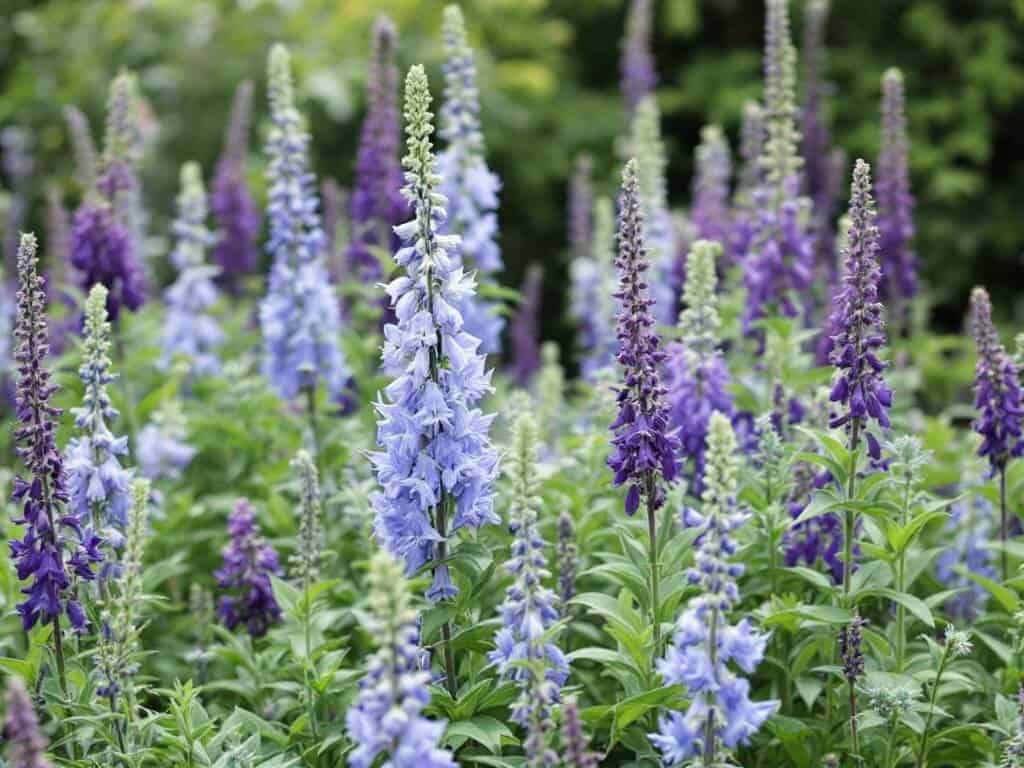
For a pop of contrast, intersperse white flowers like shasta daisies or moon-like alliums. These pale blooms catch the light beautifully, especially in the evening. Don’t forget to include grey-leaved plants like dusty miller or artemisia to enhance the cool palette.
Texturally, mix feathery foliage with broad leaves. Ferns and grasses provide a soft, airy feel, while hostas offer large, sculptural leaves.

Incorporating Vibrant Blooms
Warm, bold colours bring life and energy to the garden. Classic cottage favourites like red poppies, orange marigolds, and sunny yellow coreopsis create cheerful focal points. Pink roses climbing over an arbour or tumbling from window boxes add romance and charm.
For a truly French touch, plant lavender in generous drifts. Its purple spikes offer both colour and fragrance. Hollyhocks standing tall against a wall or fence provide vertical interest in shades of pink, red, and white.
Mix in plants with interesting textures to complement the vibrant hues. Fuzzy lamb’s ear, spiky sea holly, and ruffled peonies create a tactile wonderland. Don’t forget to include some variegated foliage for added visual interest.
Garden Features and Layout
French cottage gardens blend charming structural elements with lush plantings to create enchanting outdoor spaces. The key lies in thoughtful organisation and decorative touches that evoke a rustic, lived-in feel.
Structuring Outdoor Space
A well-planned French cottage garden balances formal structure with casual plantings. Start by dividing the space into distinct areas using low hedges, stone walls, or wooden fences. Gravel paths wind through the garden, connecting different zones. Create a sense of discovery by obscuring views with strategically placed shrubs or climbing plants on arches.
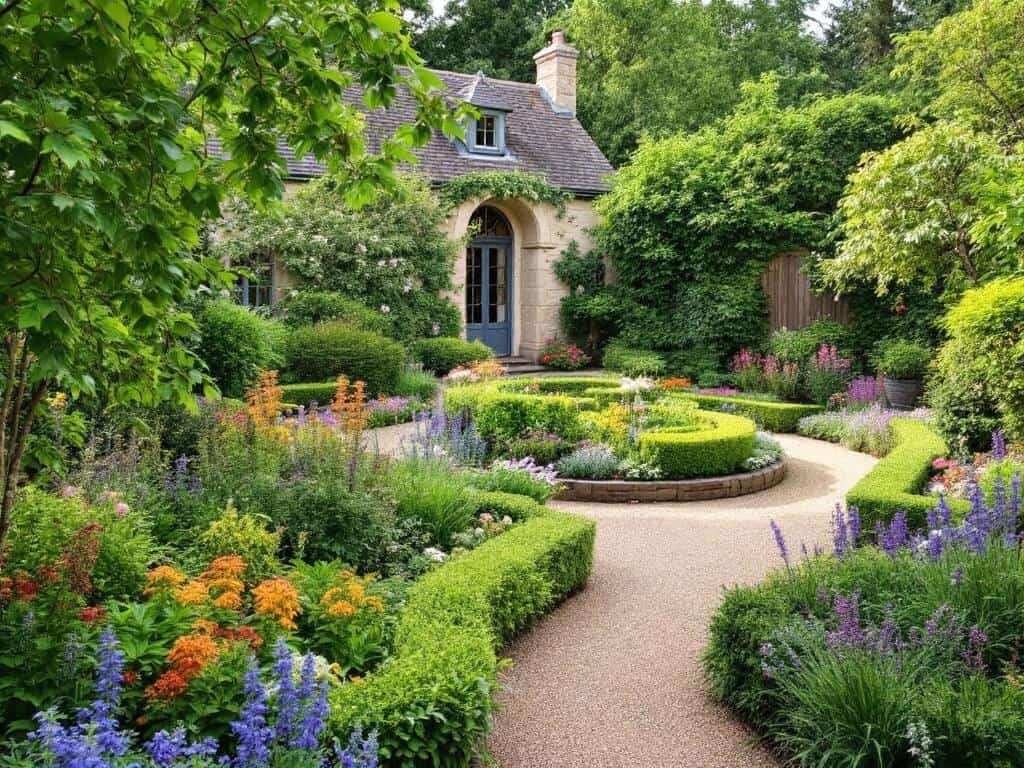
Incorporate a mix of curved and straight lines to add visual interest. A circular herb garden near the kitchen door provides both beauty and practicality. Use geometric beds filled with a jumble of flowers to contrast with wilder areas.
Include a potager (kitchen garden) with raised beds for vegetables and herbs. This practical element adds authenticity to the French cottage style.
Creating Intimate Seating Areas
Cosy nooks for relaxation are essential in a French cottage garden. Tuck a weathered wooden bench beneath a fragrant rose arbour or place a wrought-iron bistro set on a small patio.
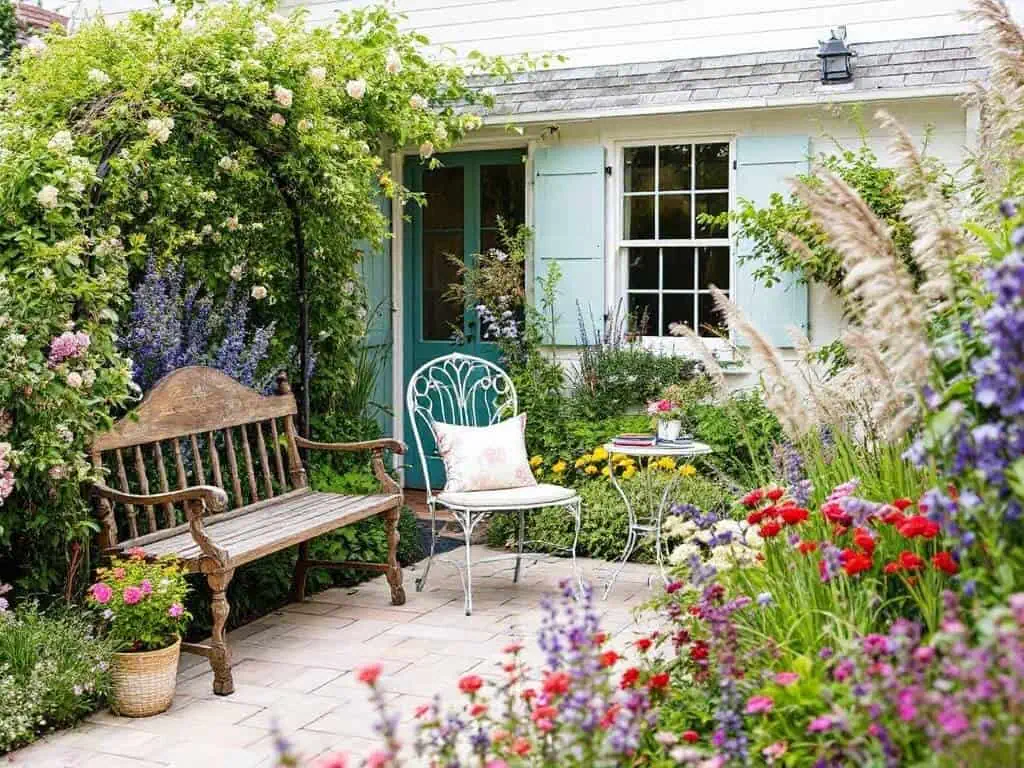
Create a secluded reading spot by surrounding a comfortable chair with tall perennials and ornamental grasses. Add charm with a vintage side table for books and tea.
For larger gatherings, design a dining area under a pergola draped with wisteria or grapevines. Use gravel or reclaimed bricks for the flooring to maintain a rustic feel.
Enhance the ambience with soft lighting. Hang string lights or lanterns from tree branches or along fences for magical evening gatherings.
Decorating with Architectural Elements
Architectural features add character and structure to a French cottage garden. Install an aged stone fountain as a focal point, surrounded by lush plantings. The gentle sound of trickling water creates a soothing atmosphere.

Incorporate antique wrought-iron gates or weathered wooden doors as garden art. Lean them against walls or use them as supports for climbing roses.
Place terracotta urns filled with geraniums or lavender at key points along paths or flanking entrances. Use obelisks or tuteurs (plant supports) to add vertical interest and support climbing plants.
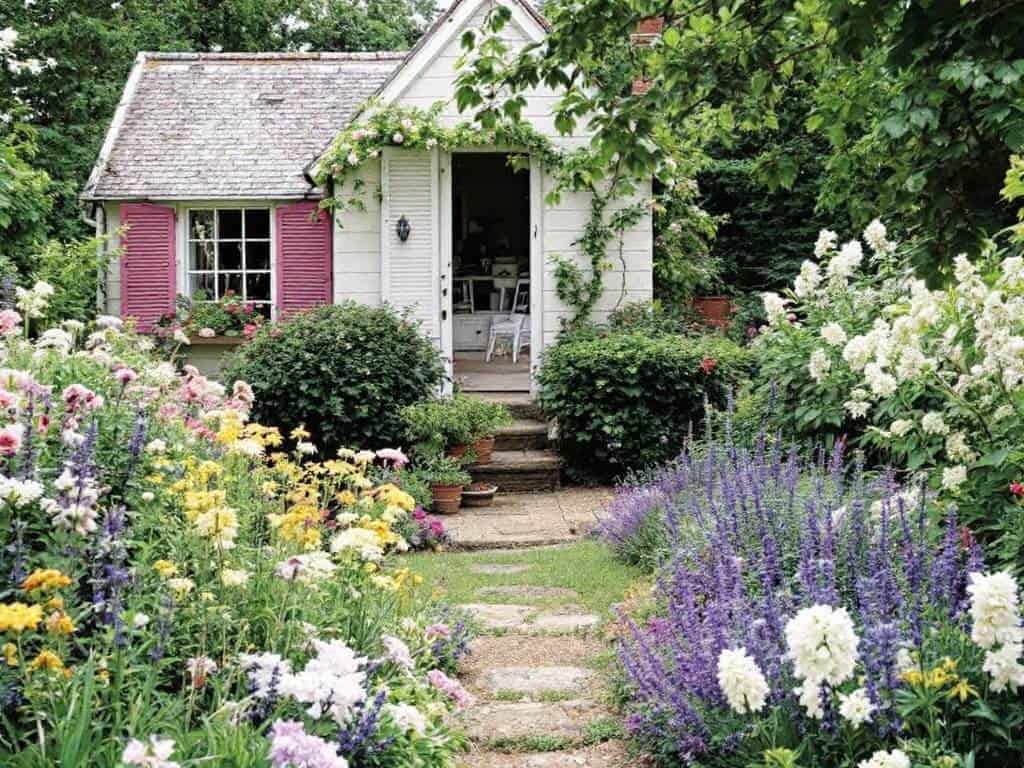
Don’t forget the charm of a rustic garden shed. Paint it a soft, weathered colour and adorn it with window boxes overflowing with flowers.
Designing a Welcoming Front Courtyard
The front garden sets the tone for a French cottage-style home. Create a small, enclosed courtyard with a low stone wall or clipped boxwood hedge. This provides privacy and a sense of intimacy.
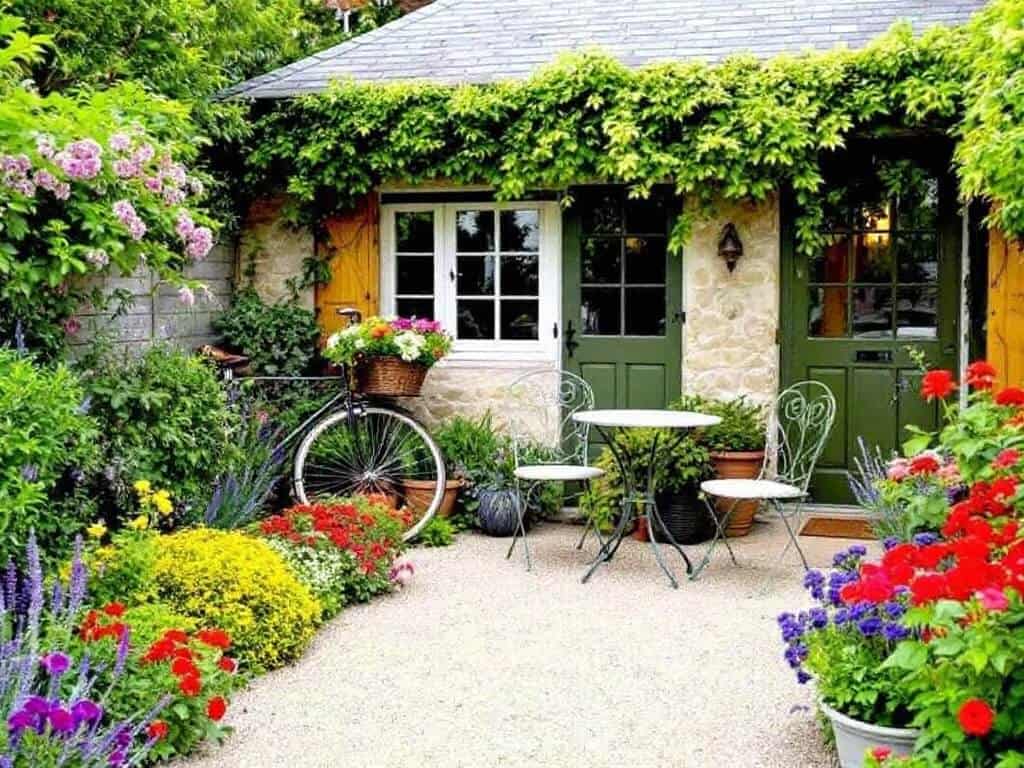
Install a gravel path leading to the front door, lined with lavender or santolina for a fragrant welcome. Add a vintage bicycle propped against the wall, its basket brimming with colourful blooms.
Place a small round table and chairs near the entrance for morning coffee or afternoon tea. Surround this area with pots of geraniums and herbs for a lived-in feel.
Hang a decorative iron bell or an antique door knocker on the front door. These small touches contribute to the overall charm and authenticity of your French cottage garden.
Other Things To Think Of
Creating a French cottage garden requires thoughtful planning and ongoing care. Let’s explore some key practical aspects to keep in mind when bringing this charming style to life.
Implementing a Vegetable Garden Section
A veggie patch is a must-have in a French cottage garden. Choose a sunny spot and divide it into raised beds for easy access. Mix in some companion plants like marigolds to deter pests naturally. Don’t forget to add charming touches like a rustic trellis for climbing beans or a scarecrow wearing a beret!
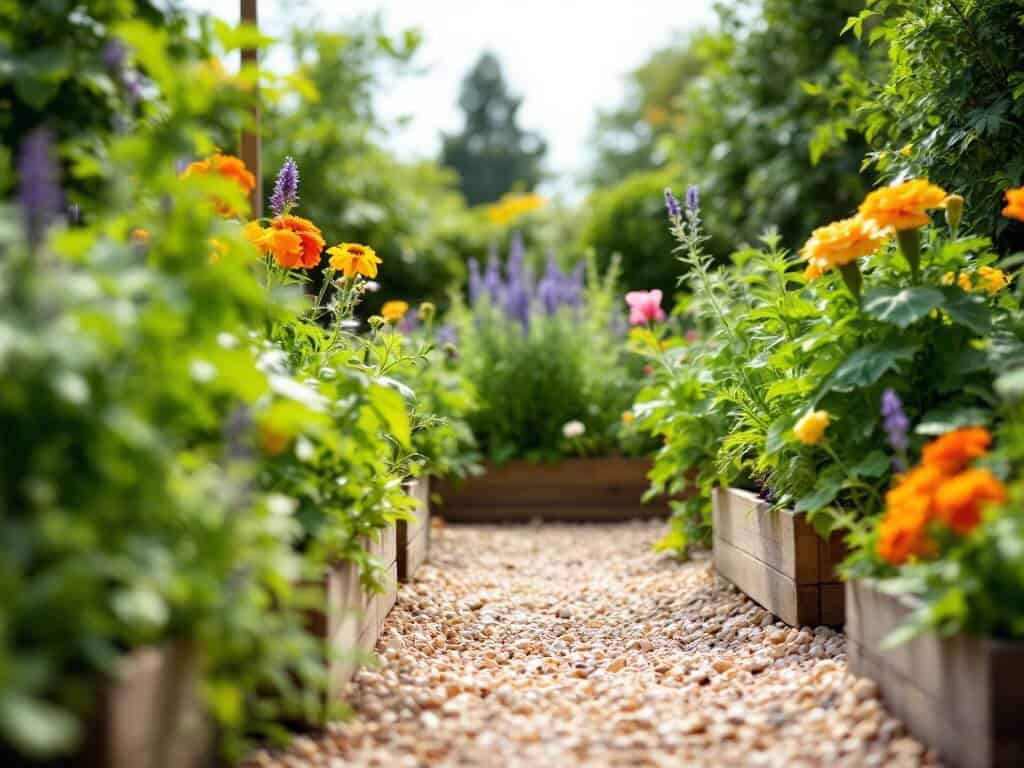
Pop in some herbs along the edges of your beds – they’ll look lovely and be handy for cooking. Think lavender, thyme, and rosemary. These will attract bees and butterflies too.
For paths between beds, try crushed oyster shells or gravel. They’ll add that perfect French country feel and help with drainage.
Maintenance and Care Tips
Keeping your French cottage garden looking its best does take a bit of work, but it’s worth it! Start by embracing a slightly wild look – don’t be too fussy about perfect edges.
Mulch your beds with compost or well-rotted manure to keep moisture in and weeds at bay. It’ll give your plants a boost too. Water deeply but less often to encourage strong roots.
Deadhead flowers regularly to keep them blooming. Let some go to seed though – they’ll self-sow and give you lovely surprises next year.
For grass areas, consider a mix of wildflowers instead of a manicured lawn. It’s easier to maintain and great for wildlife. If you do have lawn, keep it a bit longer for that relaxed cottage feel.
Personal Touches
A French cottage garden reflects the gardener’s unique personality and preferences. These personal elements transform a lovely space into a truly magical retreat that feels like home.
Incorporating Personal Style
Your garden should be an extension of you. Add vintage finds from flea markets or family heirlooms to create charming vignettes. An old bicycle adorned with flower baskets or weathered garden tools displayed artfully bring character.

Repurpose quirky objects as planters – think tea kettles, wooden crates, or even old wellies. Paint garden furniture in your favourite hues to add pops of colour. Hang wind chimes, string fairy lights, or mount decorative mirrors to play with sound and light.
Don’t be afraid to mix styles. A touch of formal structure alongside cottage whimsy creates delightful contrasts. The key is choosing elements that spark joy and tell your story.
Selecting Your Favorite Plants and Flowers
Fill your garden with plants you adore. Love lavender? Create a fragrant border. Fancy roses? Train climbers up an arch. Partial to herbs? Plant a kitchen garden near the house.
Mix in edibles with ornamentals. Tuck strawberries between flowers or train peas up decorative obelisks. Plant fruit trees for structure and harvest.
Include nostalgic favourites that evoke happy memories. Perhaps gran’s peonies or the honeysuckle from your childhood home. These personal connections deepen your attachment to the garden.
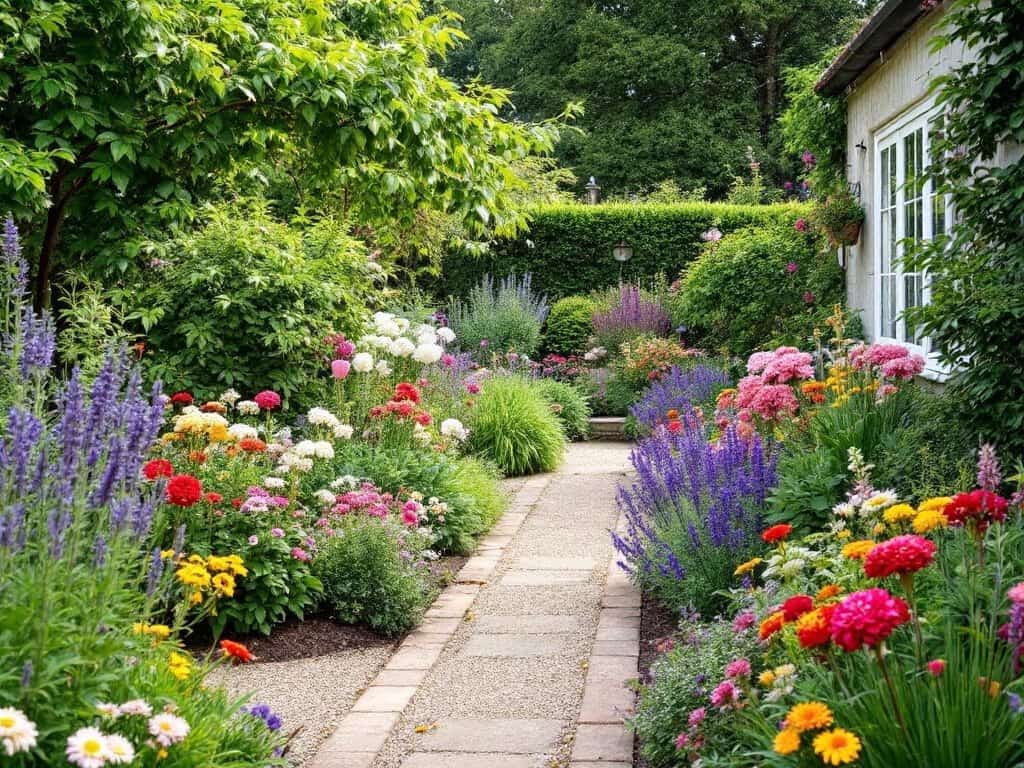
Experiment with colour schemes that please your eye. Try pastel palettes for a romantic feel or vibrant hues for energetic charm.
Adding Special Places and Little Destinations
Create cosy nooks throughout your garden to pause and enjoy the beauty. A rustic bench tucked under a rose-covered arbour invites quiet contemplation.
Add a petite dining area for alfresco meals with loved ones. A bistro set amidst fragrant herbs sets the scene for intimate gatherings.
Consider a whimsical folly like a mini greenhouse or potting shed. These functional spaces double as charming focal points.
Don’t forget to include playful elements. A small pond with a trickling fountain adds sensory delight. A winding path leading to a hidden sculpture creates a sense of discovery.
Getting Started with Your Own French Cottage Garden
Creating a French cottage garden is all about embracing a relaxed, romantic aesthetic with overflowing flowers and charming rustic elements. It’s a style that develops organically over time, blending formal and informal features.
Planning and Creating Your French Country Garden
Start by sketching out your garden layout. Include winding paths made of gravel or old bricks to create a sense of discovery. Plan for a mix of perennials, annuals, and shrubs that will provide year-round interest. Choose plants that thrive in your climate and soil type.

Incorporate classic French garden elements like lavender, roses, and boxwood. Don’t forget to add vertical interest with climbing plants on trellises or arches. A small water feature, such as a birdbath or fountain, can serve as a charming focal point.
Maybe add a cosy seating area where you can relax and enjoy your garden. An old iron bench or a rustic wooden table and chairs would fit perfectly with the French cottage style.
Define the Structure and Layout
French cottage gardens often feature an organized yet relaxed framework. Start with these key elements:
- Paths: Use gravel, bricks, or stone for curving paths that divide planting areas. These add charm and provide easy access.
- Borders: Frame the garden with low hedges (like boxwood or lavender) for structure and visual order.
- Arches and Trellises: Add climbing plants like roses, clematis, or honeysuckle to soften the structure and create height.
- Central Focal Point: Include a birdbath, fountain, sundial, or a bench surrounded by flowers.
- Symmetry with Soft Edges: Place symmetrical elements like shrubs or trees while allowing flowers to spill over paths and soften lines.
Advice for the First Few Seasons
Patience is key when starting a French-style garden. It takes time for plants to establish and fill out. In the first season, focus on preparing the soil and planting larger shrubs and perennials. These will form the backbone of your garden.
Don’t worry if your new garden looks a bit sparse at first. Use fast-growing annuals to fill in gaps while waiting for perennials to mature. Sunflowers, cosmos, and nasturtiums are great choices that add instant charm.
Embrace the slightly untamed look of a cottage garden. Allow plants to self-seed and spread naturally. This creates the relaxed, abundant feel that’s characteristic of French country gardens.
Remember to mulch well to retain moisture and suppress weeds. Water deeply but less frequently to encourage deep root growth. With time and care, your French cottage garden will develop its own unique character and charm.
Final Thoughts
Creating a French cottage garden is a delightful journey that blends nature’s beauty with personal style. It’s about embracing imperfection and letting your garden grow with a touch of whimsy.
Remember, there’s no strict rulebook. Your garden should reflect your personality and preferences. Mix colours, textures, and scents that bring you joy.
Don’t fret about perfection. A few weeds here and there add to the charm. Let plants spill over pathways and climb up walls for that authentic cottage feel.
Consider adding a cosy seating area. A rustic bench or a small table with chairs can create a lovely spot for morning tea or evening relaxation.
Embrace the seasons. Each brings its own magic to your garden. Spring blossoms, summer blooms, autumn foliage, and winter berries all contribute to the ever-changing tableau.
Lastly, be patient. Gardens take time to mature. Enjoy the process of nurturing your plants and watching them grow. Your French cottage garden will become more enchanting with each passing year.
Garden Design Style Ideas


Excellent descriptions, suggestions and advice about creating
a French country garden. Very thorough, thank you.
Thank you for stopping by and saying! I’m so glad you finding the suggestions useful!