

I’m back with another horsey post today! It’s all about the gaited horse saddle and understanding gaited horse breeds. Gaited horse saddles offer a unique riding experience tailored to the smooth, rhythmic movements of these special equines. These saddles are designed to complement the natural gaits of breeds like Tennessee Walking Horses, Spotted Saddle Horses, and other Southern gaited breeds.
The perfect gaited horse saddle provides comfort for both horse and rider whilst allowing the animal’s distinctive gait to flow unimpeded.
Riders seeking the ideal saddle for their gaited horses have a variety of options to choose from. Western-style gaited saddles are particularly popular, offering a blend of traditional aesthetics and specialised functionality. These saddles often feature tree designs that accommodate the unique back shapes of gaited horses, which can be shorter or wider than their non-gaited counterparts.
When selecting a gaited horse saddle, it’s crucial to consider factors such as the horse’s conformation, the rider’s comfort, and the intended use. Whether for leisurely trail rides or more intense training sessions, the right saddle can enhance the bond between horse and rider, allowing both to fully enjoy the smooth, gliding motion that makes gaited horses so beloved. So are you ready to explore more about the gaited saddle? Read on!
Understanding Gaited Horses
Gaited horses possess unique qualities that set them apart from other equines. These special breeds offer smooth, comfortable rides through their distinct gaits and conformation.
Characteristics of Gaited Breeds
Gaited horses have a natural ability to perform smooth, four-beat gaits. These breeds include Paso Finos, Tennessee Walking Horses, and Rocky Mountain Horses. Their unique gaits provide a smoother ride compared to traditional trotting horses.
Gaited horses often have longer backs and more flexible spines. This allows for greater freedom of movement in their hindquarters. Their conformation enables them to perform gaits like the running walk, rack, or tölt.
Many gaited breeds have a calm temperament, making them ideal for trail riding and pleasure riding. They often have high endurance and can cover long distances comfortably.
Well-known gaited horse breeds
Here is a table of some well-known gaited horse breeds:
| Breed | Origin | Gaits |
|---|---|---|
| American Saddlebred | United States | Walk, trot, canter, slow gait, rack |
| Icelandic Horse | Iceland | Walk, trot, canter, tölt, flying pace |
| Paso Fino | Latin America | Walk, corto, largo, canter |
| Peruvian Paso | Peru | Walk, paso llano, sobreandando, huachano |
| Tennessee Walking Horse | United States | Walk, running walk, canter, flat foot walk, rack |
| Racking Horse | United States | Walk, slow rack, rack, canter |
| Kentucky Mountain Saddle Horse | United States | Walk, pleasure gait, canter |
| Missouri Fox Trotter | United States | Walk, fox trot, canter |
| Marwari | India | Walk, trot, canter, revaal (similar to rack) |
| Rocky Mountain Horse | United States | Walk, trot, canter, rack, foxtrot, singlefoot |
These breeds are known for their smooth, comfortable gaits that differ from the traditional walk, trot, and canter of non-gaited horses. Each breed has its own unique set of gaits, which can vary in speed, footfall pattern, and overall appearance.
Gaited Versus Non-Gaited Breeds
The primary difference between gaited and non-gaited horses lies in their natural gaits. Non-gaited breeds typically have three basic gaits: walk, trot, and canter. Gaited horses, however, can perform additional smooth, four-beat saddle gaits.
Non-gaited horses move with a two-beat diagonal gait (trot) between walk and canter. Gaited horses replace this trot with smoother gaits like the running walk or fox trot. These gaits provide a more comfortable ride, especially over long distances.
Gaited horses often require specialised tack, including gaited horse saddles with gaited trees. These saddles accommodate their unique conformation and movement patterns. Non-gaited breeds typically use standard Western or English saddles.
Choosing the Right Saddle

Selecting an appropriate saddle is crucial for the comfort and performance of gaited horses. A well-fitted saddle enhances the horse’s natural gait and ensures rider comfort during long rides.
Importance of Saddle Fit
A properly fitted saddle is essential for gaited horses. It should distribute weight evenly across the horse’s back, preventing pressure points and discomfort. The saddle tree must match the horse’s unique back shape.
Gaited horses often have higher withers and a more pronounced shoulder movement. This requires a saddle with a narrower gullet and shorter bars to accommodate their unique anatomy.
Regular saddle fitting checks are vital, as a horse’s shape can change over time. A professional saddle fitter can help ensure the saddle continues to fit well as the horse develops.
Saddle Features for Gaited Horses
Gaited horse saddles have specific features to complement their distinctive movement patterns. A flexible tree allows for greater freedom of movement, enhancing the horse’s natural gait.
Many gaited saddles feature:
- Narrower gullets (around 6 3/4 inches)
- Shorter bars for improved shoulder clearance
- Adjustable position rigging for customised fit
- Lightweight materials to reduce the burden on the horse
Western-style gaited saddles often have a more pronounced seat to provide stability during the smooth, rolling gaits. Some models offer interchangeable gullet systems for a customisable fit.
Look for saddles with ample padding in the seat and stirrup areas to enhance rider comfort during long trail rides. A well-designed gaited saddle should allow the horse to move freely whilst providing a secure and comfortable seat for the rider.
Types of Gaited Horse Saddles
Gaited horse saddles come in various designs to accommodate the unique needs of these smooth-moving equines. The three main categories are Western trail saddles, pleasure and show saddles, and speciality custom options.
Western Trail Saddles
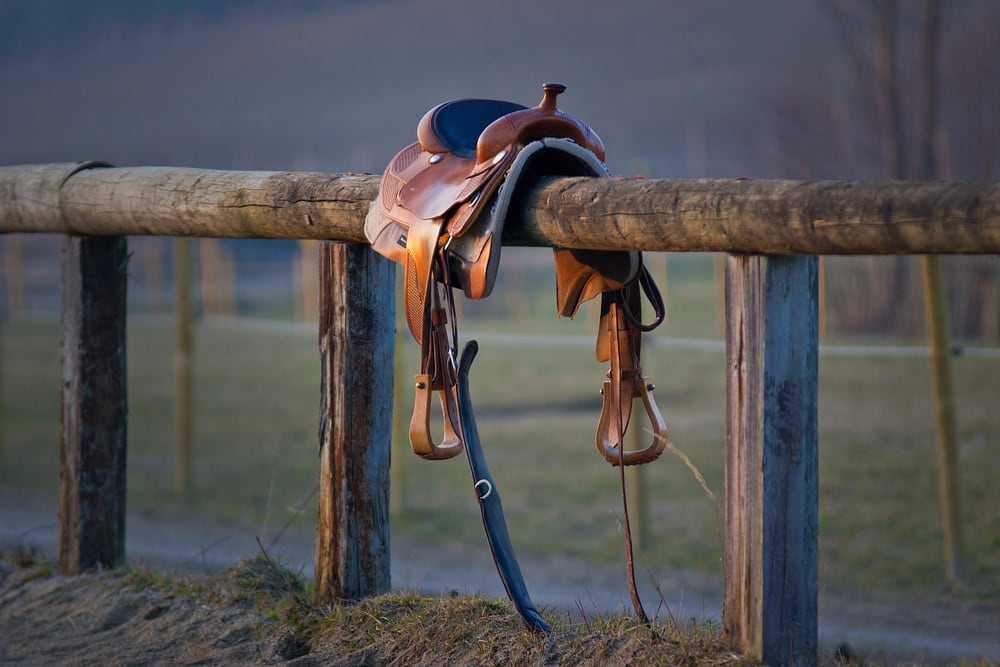
Western saddles for gaited horses feature a distinct design to suit their unique gaits. These saddles typically have a wider gullet, measuring around 6 3/4 inches, to allow for greater shoulder movement. The tree is often flexible, like the Circle Y Alabama Flex2 Trail Gaiter Saddle, which adapts to the horse’s back shape.
Many Western trail saddles for gaited horses are lightweight, weighing between 18-19 pounds. This reduced weight helps minimise fatigue during long rides. Brands like Big Horn and Fabtron offer popular Western-style options specifically tailored for gaited horses.
Some Western trail saddles feature air-filled panels or shock-absorbing trees for added comfort. These design elements help distribute the rider’s weight evenly and reduce pressure points on the horse’s back.
Pleasure and Show Saddles
Pleasure and show saddles for gaited horses prioritise both comfort and style. These saddles often have a more refined appearance, with intricate tooling and elegant finishes to catch the judge’s eye in the show ring.
Many pleasure saddles for gaited horses feature a close-contact design, allowing the rider to feel the horse’s movements more precisely. This is particularly important for showcasing the smooth gaits in competitions.
Some popular pleasure saddle options include the Steele Saddle and the Freedom Saddle. These models often incorporate lightweight materials and ergonomic designs to enhance both horse and rider comfort during extended periods in the saddle.
Specialty and Custom Saddles
For gaited horses with unique conformations or specific needs, speciality and custom saddles offer tailored solutions. These saddles can be crafted to address issues such as high withers, short backs, or asymmetrical shoulders.
Custom saddle makers often use advanced fitting techniques, including 3D scanning and pressure mapping, to create a perfect fit. This level of customisation can significantly improve the horse’s comfort and performance.
Some speciality saddles combine elements of different saddle types. These hybrid designs may incorporate features from Western, English, and Australian saddles to create a versatile option for gaited horse riders.
Here is a table comparing different types of gaited horse saddles
| Saddle Type | Description | Key Features | Suitable For |
|---|---|---|---|
| Plantation Saddle | A classic saddle designed for gaited horses, often featuring a high cantle and pommel. | – Gaited tree with a narrower gullet – High cantle and pommel for rider comfort – Longer, flatter seat for optimal gaiting position | – Tennessee Walking Horses – Racking Horses – Spotted Saddle Horses |
| Peruvian Saddle | A saddle specifically designed for Peruvian Paso horses, with a deep seat and high cantle. | – Deep, comfortable seat – High cantle for back support – Gaited tree with a narrower gullet | – Peruvian Paso Horses |
| Paso Fino Saddle | A lightweight saddle designed for the Paso Fino breed, featuring a flat seat and low cantle. | – Flat seat to allow for closer contact with the horse – Low cantle for easy mounting and dismounting – Gaited tree with a narrower gullet | – Paso Fino Horses |
| Endurance Saddle | A lightweight, comfortable saddle designed for long-distance riding, suitable for gaited horses with some modifications. | – Lightweight design to reduce fatigue – Adjustable stirrups for optimal positioning – Gaited bars that are shorter than traditional western saddles, allowing for hind leg freedom | – Various gaited breeds – Long-distance riding |
| Trail Saddle | A versatile saddle designed for comfort and security during trail riding, with gaited horse-specific modifications. | – Secure, comfortable seat – Ample saddle strings and D-rings for attaching gear – Gaited tree with a narrower gullet | – Various gaited breeds – Recreational trail riding |
Each type of gaited horse saddle is designed to accommodate the unique gaits and conformation of specific gaited breeds, prioritizing comfort for both horse and rider. When choosing a saddle for a gaited horse, it is essential to consider the horse’s breed, conformation and intended use to ensure the best fit and performance.
Saddle Accessories and Tack
Selecting the right accessories and tack is crucial for a comfortable ride on a gaited horse. Proper fitting components enhance both horse and rider performance.
Selecting a Saddle Pad
A well-chosen saddle pad is essential for gaited horse comfort. It provides cushioning and helps distribute the rider’s weight evenly. Look for pads made from breathable materials like wool or synthetic fibres that wick away moisture.
Contoured pads designed specifically for gaited horses offer better fit and stability. These often feature a cut-out wither area to prevent rubbing. The thickness of the pad should match the saddle’s fit. Thicker for looser-fitting saddles, and thinner for snug fits.
Consider pads with shock-absorbing properties for long trail rides. Some feature gel inserts or memory foam for added comfort. Always ensure the pad extends beyond the saddle edges to protect the horse’s back.
Additional Tack for Gaited Horses
Gaited horses benefit from specialised tack to complement their unique gaits. A breast collar helps keep the saddle in place during steep climbs or fast-paced rides. Choose one made of soft, supple leather to prevent chafing.
Leather saddle pockets are handy for carrying essentials on trail rides. These attach to the saddle strings and come in various sizes. Some riders prefer saddlebags for longer trips, which offer more storage capacity.
A well-fitted bridle is crucial for communication between horse and rider. Opt for wider nosebands and browbands for added comfort. Bitless options are gaining popularity among gaited horse enthusiasts.
Consider adding a crupper to prevent the saddle from sliding forward, especially on horses with low withers. This piece of tack attaches to the back of the saddle and loops under the horse’s tail.
Ensuring the Perfect Saddle Fit
Proper saddle fit is crucial for gaited horse comfort and performance. Leading manufacturers offer fit guarantee programmes to help riders find the ideal saddle.
Ask. Some companies provide detailed measurement guides and fitting videos. These resources will help you to take accurate measurements of your horse’s back.
Trial periods allow riders to test saddles before committing. This hands-on experience ensures the saddle works well for both horse and rider.
Custom fitting services are available from select makers. Expert fitters may travel to assess horses in person, ensuring a truly bespoke fit.
Purchasing and Maintenance
Selecting and caring for a gaited horse saddle requires careful consideration and ongoing attention. Proper fit and upkeep ensure both horse and rider comfort for years to come.
Buying a New Saddle
When purchasing a new gaited horse saddle, prioritise fit and function. Custom saddles offer the best-tailored solution for your horse’s unique conformation. Many retailers provide free shipping on new saddles, making it easier to try different options.
Look for saddles with features that accommodate gaited horses’ movement, such as flexible trees and ample shoulder clearance. Affordable saddles are available but invest in quality materials for longevity.
Consider leather saddle pockets for added convenience on trail rides. Take advantage of ‘quick view’ options on websites to compare multiple saddles efficiently.
Caring for Your Saddle
Regular maintenance extends the life of your gaited horse saddle. Clean the leather after each use with a damp cloth to remove sweat and dirt.
Apply a quality leather conditioner every few weeks to keep the saddle supple and prevent cracking. Pay special attention to high-wear areas like the seat and fenders.
Store the saddle in a cool, dry place on a proper saddle rack to maintain its shape. Use a breathable saddle cover to protect from dust and sunlight when not in use.
Check fittings and hardware regularly, tightening loose screws and replacing worn parts promptly. With proper care, a well-made saddle can last for decades.
You may also like:
- Azoturia in Horses: Recognizing Signs and Finding Solutions
- Speed and Style: The Best Fast Horse Names
- The Ultimate Equine Battle: Quarter Horse vs Thoroughbred