
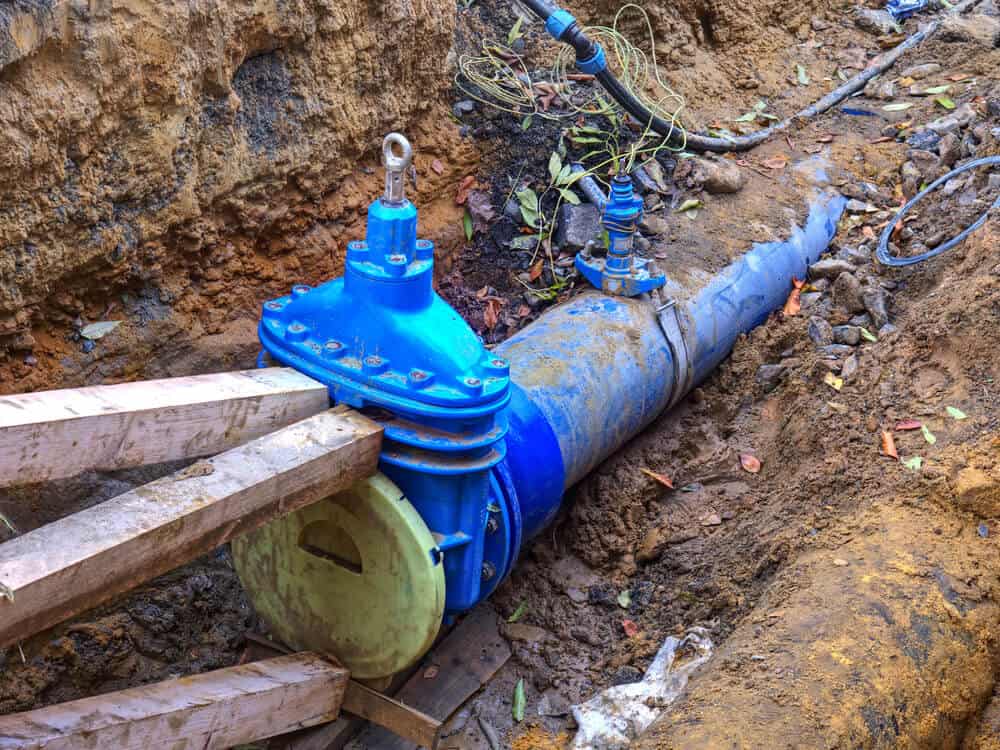
Upgrading a buried water line on acreage takes more preparation than replacing plumbing beside a house. Long pipe runs may cross paddocks, driveways and areas used by livestock or machinery.
Unknown utility routes and changing soil conditions add to the challenge. Before work starts, confirm which taps, tanks and buildings depend on the line, then arrange a temporary water supply if an outage would affect animals or household needs.
Map Existing Rural Piping
Start with old property plans, receipts and notes from previous owners, but treat them as clues instead of confirmed records. Walk the proposed route and mark meters, valves, hydrants, pump sheds and unusually green strips that may reveal a leaking pipe. Record each feature on a simple map with measurements from permanent reference points such as fence corners or buildings.
Arrange professional utility locating before digging. The safe digging guidance for property owners recommends having buried services marked and respecting the tolerance zone around those markings. Private water pipes may not appear in public records, so small inspection holes can still be necessary. Keep the finished map, pipe depth and photographs for future repairs.
Non-Destructive Trenching Options
Choose the excavation method after considering the soil, access and number of existing services. A conventional excavator can open clear ground quickly, but its bucket may damage an unmarked cable, drainage pipe or irrigation branch. It can also remove more pasture than a narrow water-line project requires.
Where a route passes through a crowded service corridor, contractors may use vacuum excavation to expose buried utilities or create targeted trenches with less risk of mechanical contact. Ask the contractor to inspect site access, overhead clearance, disposal arrangements and wet ground before quoting.
For long open runs, a narrow trencher may be practical once crossings have been exposed. Directional boring can reduce surface disturbance beneath a driveway, although entry and exit pits are still required. Match the method to each part of the route instead of assuming one machine suits the whole property.
Select Freeze-Proof Piping Materials
No water pipe is completely freeze-proof, so depth and installation quality matter as much as material. Check the local frost depth with your building authority and place the line below that level unless an approved insulated design applies. The cold-weather water line guidance can also help acreage owners understand insulation and exposure risks.
Use pipe rated for potable water, burial and the expected working pressure. High-density polyethylene is common on long rural runs because it comes in coils and needs fewer underground joints. Pressure-rated PVC may suit straight trenches where local codes allow it.
Bed the pipe in clean material without sharp rocks. Add protective sleeves at driveway crossings, install accessible isolation valves and use tracer wire with nonmetallic pipe when required. A pressure test before backfilling can reveal a poor connection while it remains easy to reach.
Restore Pasture Turf and Soil Health
Separate topsoil from subsoil as the trench opens. When backfilling, replace suitable subsoil first and compact it in shallow lifts to limit later settlement. Heavy compaction can restrict drainage and root growth, so keep loaded machinery off wet pasture and avoid repeatedly driving along the same strip.
Return the saved topsoil without burying stones, construction debris or heavy clay at the surface. Grade the area slightly high because trench fill often settles after rain. Reseed with a pasture mix suited to the property and cover bare soil with clean straw if runoff is likely.
Check the route after the first heavy rain and again after a few months. Fill depressions before they hold water or become hazards for livestock and equipment. Keep markers above major valves and photograph the restored route from fixed landmarks. Those records will make the next repair far quicker and help protect the new line from future fencing, planting or drainage work.
A final walk-through should confirm that every outlet has normal flow, each valve operates freely and no damp patches have appeared along the trench. Once those checks are complete, store the updated pipe map with the property’s maintenance records.