
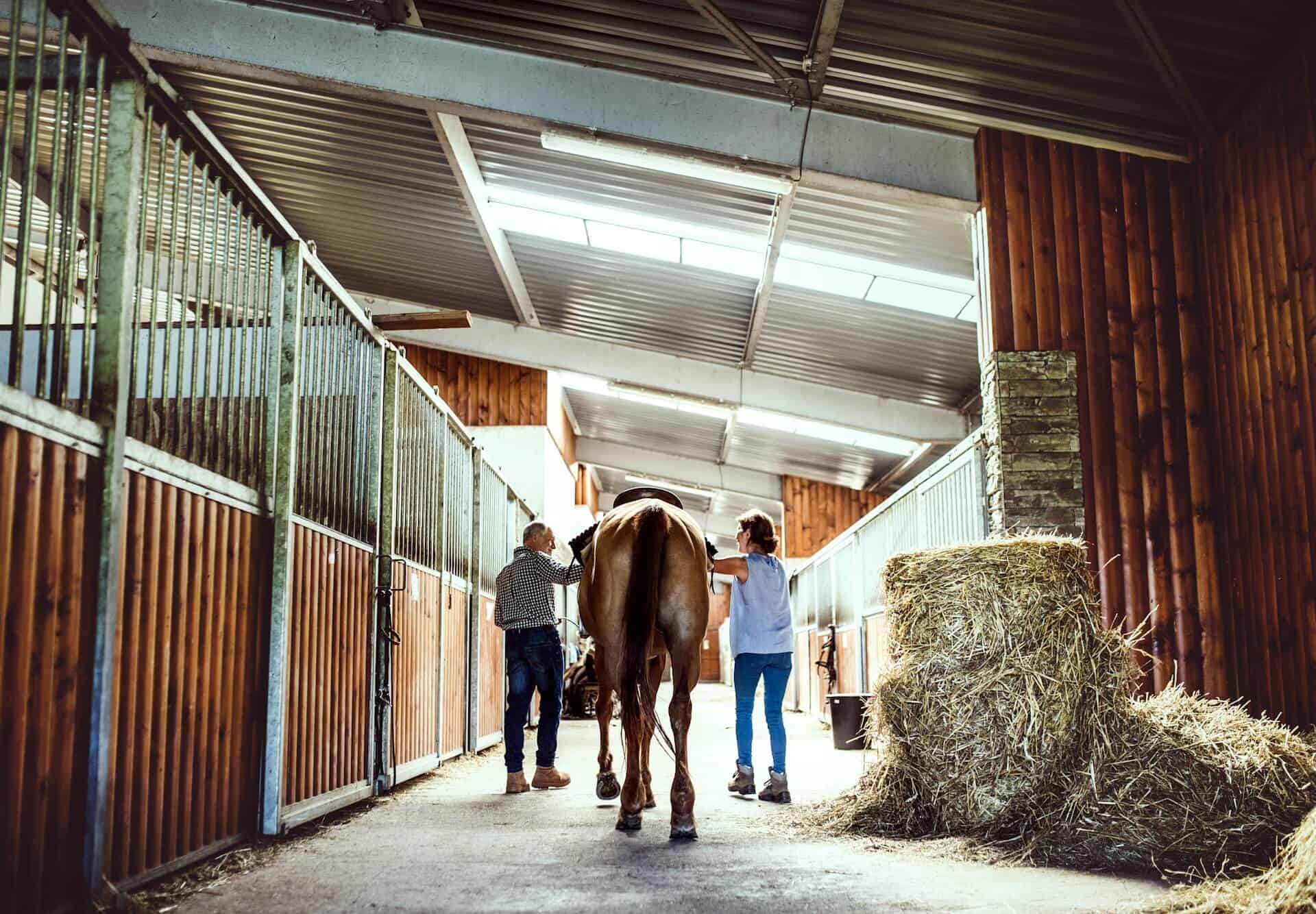
Stable lighting and temperature control affect daily chores, energy costs and the comfort of every horse in the barn. A safer setup starts with protected electrical equipment, efficient fixtures and steady airflow. Once those basics are in place, timers and renewable energy can reduce the amount of hands-on adjustment required. Review the whole facility as one system, including stalls, aisles, feed rooms and exterior work areas, since a weak point in one space can affect the rest of the barn.
Equine Facility Safety Standards
Begin with a walk-through during daylight and again after dark. Look for exposed cords, loose covers, damaged switches and shadowy areas where someone could miss a latch or trip over equipment. The practical horse barn safety guidance also emphasizes keeping fixtures clean and checking for conditions that could create avoidable risks.
Use enclosed electrical boxes and fixtures rated for dusty or damp environments. Place wiring inside protective conduit where horses can’t reach it, and keep switches outside stalls whenever possible. A licensed electrician should confirm that circuits, grounding and protective devices meet local requirements. Add inspections to the seasonal maintenance calendar so cracked lenses and unusual heat don’t go unnoticed.
Low-Heat Fixtures for Safe Stalls
Choose LED fixtures designed for agricultural buildings because they produce less heat than many older bulbs and need replacement less often. Sealed housings help prevent dust and moisture from reaching internal components. For practical comparisons, this stable lighting guide covers fixture types suited to stalls, aisles and work areas.
Aim for even coverage instead of one harsh light above each stall. Place fixtures high enough to avoid contact, then use guards where accidental impact remains possible. Check for flicker with a phone camera and replace any unstable unit promptly. When calculating the facility’s lower electrical load, owners in Wollongong and surrounding areas may also consider professionally installed solar panels as part of a broader plan to reduce grid energy use.
Harness Free Energy with Solar Panels
Start with an energy audit before choosing a system size. Record the wattage and daily operating time of lights, fans, pumps and other essential equipment. For example, ten 20-watt LED fixtures running five hours per day use about 1 kilowatt-hour. Those figures give an installer a clearer picture of regular demand and seasonal changes.
Roof condition matters too. Ask a qualified professional to assess orientation, shade from trees and the structure’s ability to support an installation. Keep panels away from areas where dust buildup is especially heavy, and plan safe access for inspection and cleaning. If battery storage is under consideration, identify which circuits need backup first. Ventilation controls and essential aisle lighting usually deserve priority over nonessential exterior lighting.
Automating Ventilation Cycles
Connect exhaust fans or ridge ventilation controls to thermostats, humidity sensors or programmable timers. Simple automation can prevent a closed barn from becoming stuffy between routine checks, especially overnight. Set controls in small stages so several large fans don’t start at once and create a sudden noise that may unsettle horses.
Sensors need careful placement. Mount them away from direct sunlight, water spray and concentrated airflow from a fan, since those conditions can distort readings. Clean sensor covers regularly and test manual overrides every month. Natural airflow should remain part of the plan, so keep vents clear and repair doors or windows that no longer open properly. On the next warm afternoon, watch one complete ventilation cycle and confirm that air moves through the stalls without creating a strong draft at horse level.