
Over the past few years, artificial intelligence (AI) has found its way into everyday life. It could be powering your phone’s voice assistant, recommending your next box set, or handling customer queries online. But did you know that AI is also changing the future of farming?
Yes, agriculture, often seen as a traditional and hands-on industry is undergoing a digital transformation. Farmers across the UK and beyond are adopting AI to work smarter, save time, and create more sustainable practices.
The Role of Industrial Vision Systems
A big part of AI in farming involves vision technology, essentially, teaching machines to “see” and interpret images like a human would. These systems can be used for tasks like sorting produce, detecting imperfections, and even identifying weeds among crops.
Companies like Industrial Vision Systems are at the forefront of this innovation. Their solutions help automate tasks that used to require hours of manual labour, boosting productivity and quality control across the farming process.
This kind of technology is especially helpful during harvesting and post-harvest processing. For example, AI-powered vision systems can quickly and accurately sort fruit and vegetables by size, ripeness, and appearance, reducing waste and ensuring only the best quality produce makes it to market.
Smarter Crop Monitoring
One of the biggest challenges farmers face is keeping an eye on the health of their crops. With large fields and tight schedules, it’s not always easy to spot the early signs of disease or nutrient deficiencies.
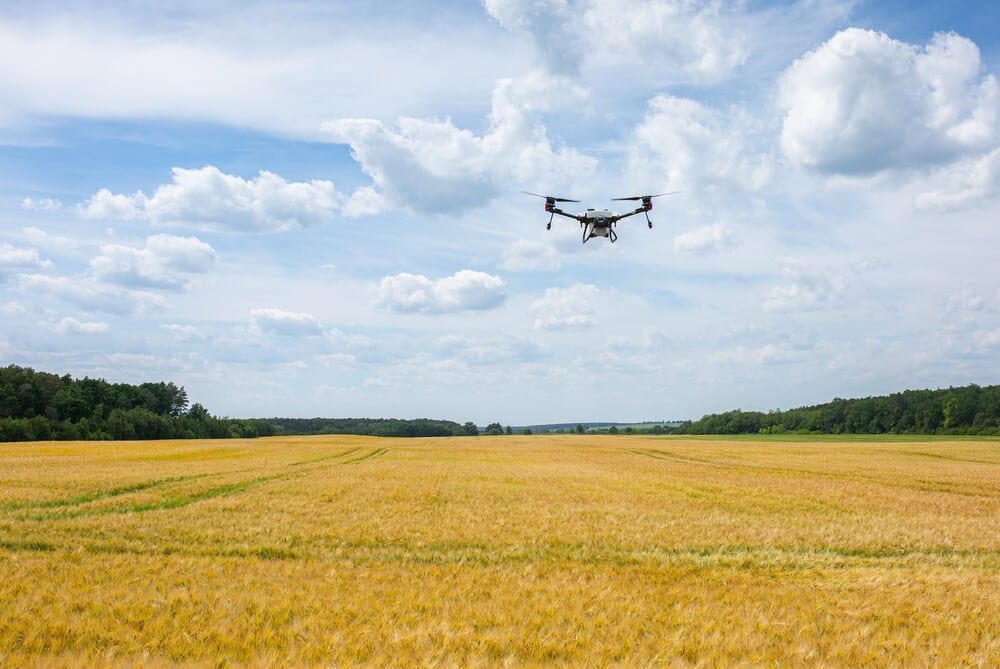
That’s where AI comes in. Drones and smart sensors can scan entire fields, capturing detailed images that AI systems analyse for irregularities. They can check unusual leaf colouring or stunted growth, these technologies help farmers catch issues early before they spread or cause major damage.

Data-Driven Decisions with Precision Farming
AI thrives on data. And when it comes to farming, there’s plenty of it, soil conditions, rainfall, sunlight, planting schedules, and more. AI tools take this information and turn it into actionable insights.
This approach, known as precision farming, allows farmers to apply water, fertiliser, and pesticides only where and when they’re needed. That not only improves efficiency and crop yield, but also cuts down on costs and environmental impact.
Improving Animal Welfare with AI
AI isn’t just for crops. Livestock farmers are also seeing the benefits. Wearable sensors and smart cameras can monitor animals’ movement, eating patterns, and health indicators.
If something looks off, say a cow isn’t eating as much or has a raised temperature AI can flag it up straight away. This early detection helps prevent illness spreading through a herd and improves overall animal wellbeing.

Predicting Harvests
Farmers have always relied on experience and instinct to predict harvests. But with climate change making weather patterns more unpredictable, that’s becoming harder.
AI helps by combining historical data with real-time inputs from the field. The result? Much more accurate yield forecasts. This helps farmers plan better – lining up buyers, arranging storage, or managing labour during harvest season.
The Future is Bright (and Smart!)
AI might once have seemed like the stuff of sci-fi, but in today’s farming world, it’s very real, and very useful. From spotting crop diseases to sorting apples with laser precision, these tools are helping farmers of all sizes embrace the future.
Cutting-edge solutions are becoming more accessible and practical, even for smaller, family-run farms.
The bottom line? AI isn’t replacing farmers, it’s empowering them. By combining generations of farming know-how with modern tech, the next chapter of agriculture looks smarter, more efficient, and more sustainable than ever.