
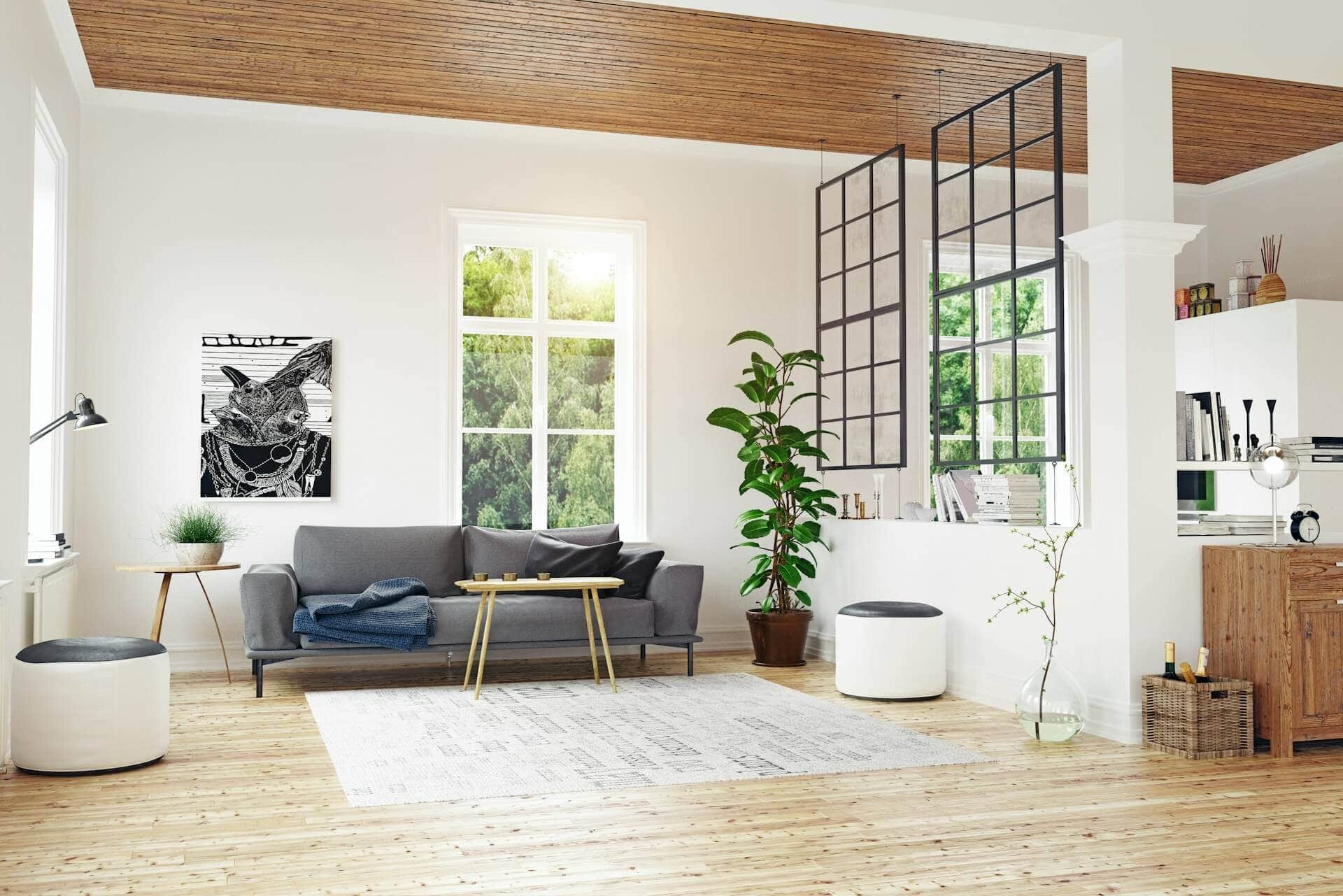
A minimalist and sustainable living room doesn’t have to look like a blank page. Maintaining an uncluttered and still highly personalized space is all about thoughtful design choices. From smarter storage to eco-friendly upgrades, you can achieve a pleasing living room even with less stuff.
Whether you’re craving calm or trying to live greener without the overwhelm, this guide will help you transform your space with practical, stylish solutions. Let’s talk about five tangible ways to transform your living room into a sustainable and minimalist one.

1. Declutter with Intention
Decluttering is the cornerstone to having a minimalist space. And we’re not talking about mindlessly stuffing things into baskets or shoving them into closets. The first real step toward a sustainable and minimalist living room is evaluating what you actually use and love.
That vintage vase you haven’t dusted since 2021? Maybe it’s time to pass it on. Sustainable living starts with curating your belongings so you’re not just hiding clutter, but consciously reducing it. The less you own, the more room you have for things that truly matter.
A minimalist mindset isn’t just a weekend project; it’s a lifestyle shift. Set a rule that for every new item you bring into the space, something else has to go. Fewer impulse buys mean less waste—a win for your wallet and the planet.
2. Invest in Multi-Functional Furniture
Minimalism is all about doing more with less, and the same goes for your furniture. Think pieces that serve double duty: a coffee table with hidden storage, an ottoman that opens up to hold board games, or a floor lamp with built-in shelves from Swift Beacon.
These not only keep the space tidy but reduce the need to buy separate items, cutting down on material waste and environmental impact.
When choosing furniture, opt for sustainably sourced materials like FSC-certified wood, bamboo, or reclaimed materials. These aren’t just buzzwords – they’re standards that help you reduce your carbon footprint. Look for labels, certifications, and company practices that align with eco-conscious manufacturing.
3. Go Green (Literally)
Nothing screams eco-living louder than a leafy monstera in a matte ceramic pot. But plants aren’t just for beautifying a room; they’re natural air purifiers that filter toxins and boost mood. Greenery is an easy and sustainable way to elevate your living room aesthetic.
Start small with low-maintenance varieties like snake plants, pothos, or ZZ plants. These are perfect for those of us who forget to water until the leaves cry for help. These plants not only thrive on minimal care but also thrive in minimalist settings, adding a fresh layer of texture and color without overpowering the space.

Skip the plastic planters and opt for natural materials like terracotta, clay, or recycled ceramic pots. And don’t overdo it. A few strategically placed plants can make your space feel vibrant and alive without turning your living room into a greenhouse.
4. Embrace Negative Space
Here’s a minimalist trick that costs exactly zero dollars: leave some breathing room. Negative space – aka the empty spots between furniture, around artwork, or on surfaces—isn’t a design flaw. It’s an intentional choice that makes your room feel more open and focused.
Rather than cluttering every surface with knickknacks, leave some tabletops bare or decorate with one or two standout pieces. The same goes for your walls – don’t feel the need to hang something on every square inch. Let your decor have room to shine.
This doesn’t mean your space has to feel sterile. Play around with a select number of decor items with varying textures, materials, and shapes. Think of negative space as the pause in a good conversation – it lets everything else make more sense.
5. Choose a Neutral Color Palette
One of the easiest ways to bring calm and cohesion into your living room is through a neutral, earthy color palette. Think beige, sand, sage green, soft gray, and warm whites. Not only do these tones reflect more light (making your space feel larger), but they also encourage you to keep things simple.
Loud and trendy colors can sometimes lead to fast-cycle decorating. Meaning that when they’re not hyped up or considered “aesthetic” anymore, you’re subtly pressured to redecorate just to keep up with the latest interior design craze.
Sticking with a natural palette ensures your living room won’t go out of style after the next seasonal Pinterest trend. It’s a subtle choice that undeniably results in a more comfortable and soothing living room ambiance.

Minimalist and Eco-Friendly Living Room Makeover
Creating a sustainable and minimalist living room shouldn’t result in deprivation. With a little planning and a lot of intention, you can design a room that looks chic and feels more grounded.
Remember, this isn’t about getting it all “perfect” on day one. Again, minimalism and sustainability should be about conscious choices that lead to a lifestyle change.
Think of it as self-care for your home, one sustainable swap at a time. So, the next time you want to sip iced matcha while watching your favorite rom-com, you can easily unwind and relax in your minimalist and eco-friendly living room.