
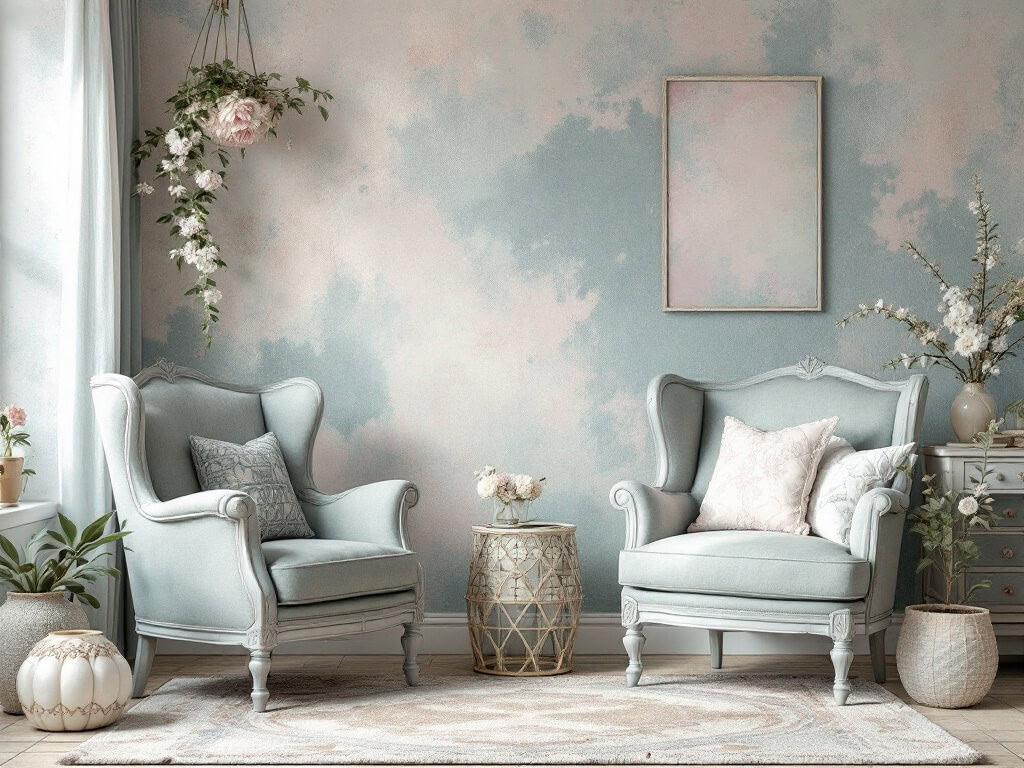
Shabby chic has charmed its way into homes for decades with its unique blend of elegance and casual comfort. This interior design aesthetic embraces the beauty of imperfection, celebrating worn textures and vintage charm.
Shabby chic style is characterised by a soft colour palette of whites, creams, and pastels, paired with distressed furniture and delicate floral patterns.

At the heart of shabby chic lies a romantic nostalgia for the past. Victorian-era furnishings take centre stage, often painted in chalky hues and purposefully aged to create a timeworn appearance. Soft linens, lace accents, and ornate details add a feminine touch, while rustic elements like weathered wood bring a cosy, lived-in feel to spaces.
The shabby chic aesthetic extends beyond the living room, influencing bedroom decor with flowing fabrics and antique-inspired accessories. While the look has evolved over time, shedding some of its more elaborate embellishments, its core principles of beauty, comfort, and function continue to captivate design enthusiasts.
The Roots of Shabby Chic
Shabby chic’s origins lie in the grand country houses of Britain, blending vintage elegance with comfortable imperfection. This aesthetic draws inspiration from well-worn furniture, faded fabrics, and a touch of old-world charm.
Style’s History
Shabby chic emerged in the 1980s, gaining popularity through the 1990s. Designer Rachel Ashwell played a crucial role in popularising the style. She founded a furniture chain called Shabby Chic and published a book, describing the aesthetic as “the aura of old money, cushy comfort“.
The look evolved from the typical English country house décor, with its large, airy spaces filled with time-worn furnishings. It also drew influence from quaint cottages and Victorian terrace houses in British cities.

Influences and Origins
French Country style significantly influenced shabby chic, contributing its rustic elegance and soft colour palette. The aesthetic often incorporates ornate floral patterns, delicate detailing, and muted hues like light pink, pastel blue, and chalky white.
English style, with its appreciation for antiques and eclectic mix of furnishings, forms another cornerstone of shabby chic. The popularity of period dramas like Downton Abbey has further fuelled interest in this nostalgic aesthetic.
Shabby chic embraces the beauty of imperfection, celebrating the patina of age on furniture and décor. This approach creates a lived-in, comfortable atmosphere that resonates with those seeking a respite from modern minimalism.
Defining Shabby Chic
Shabby chic blends vintage elegance with a lived-in charm, creating a cosy and inviting atmosphere. This unique aesthetic embraces imperfections and celebrates the beauty of well-loved pieces.
Core Principles
Shabby chic revolves around creating a warm, romantic ambience using a mix of old and new elements. At its heart lies a love for antique and vintage furniture, often featuring distressed finishes or chipped paint. Rustic wood finishes are common, adding character and depth to spaces.

The style favours a relaxed, unfussy approach to decorating. Furniture arrangements are informal, with a focus on comfort and functionality. Soft, flowing fabrics like linen and cotton are popular choices for upholstery and window treatments.
Accessories play a crucial role in shabby chic decor. Vintage finds, such as ornate picture frames, delicate china, and weathered metal accents, add layers of interest and personality to rooms.
Beauty of Imperfection
Shabby chic celebrates the charm of wear and tear. Instead of hiding signs of age, this style embraces them as part of an item’s story and appeal. Furniture might showcase peeling paint, slight rust, or gentle scuffs.

This approach extends to textiles as well. Fabrics with a slightly faded appearance or subtle fraying are prized for their character. The goal is to create a space that feels lived-in and loved, rather than pristine and untouched.
Handmade and repurposed items fit perfectly into this aesthetic. Upcycled pieces, such as an old ladder used as a bookshelf or vintage suitcases stacked as a side table, add unique charm and eco-friendly appeal to shabby chic interiors.
Romantic Colours and Patterns
The shabby chic colour palette is soft and soothing, dominated by gentle pastels and neutral tones. Whites, creams, and soft greys form the base, often accented with blush pinks, pale blues, and muted greens.
Floral patterns are a hallmark of shabby chic style. Delicate rose prints, subtle cottage florals, and vintage-inspired botanical designs add a romantic touch to textiles and wallpapers. These patterns are often mixed with subtle stripes or checks for added visual interest.
Textures play a crucial role in creating depth within this soft colour scheme. Lace, embroidery, and crochet details add intricate beauty to linens and soft furnishings. The overall effect is a dreamy, nostalgic atmosphere that feels both elegant and comfortably lived-in.
Elements of Shabby Chic Decor
Shabby chic decor embraces a harmonious blend of vintage charm and modern comfort. The style’s key elements work together to create a cosy, lived-in atmosphere that feels both elegant and inviting.
Furniture Selections
Shabby chic furniture is the cornerstone of this aesthetic. Vintage pieces with distressed finishes and chipped paint are prized finds. Slip-covered sofas and armchairs in soft, neutral hues offer comfort and practicality. Look for wooden dressers, cabinets, and tables with a weathered patina or painted in pastel shades.
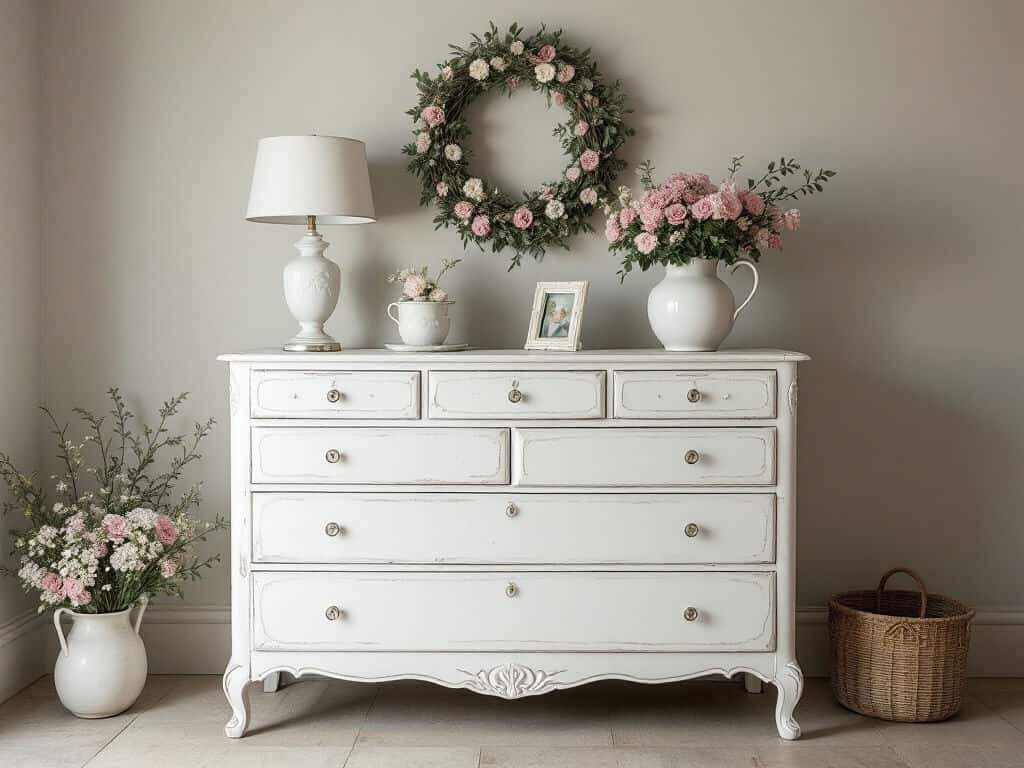
Wrought iron bed frames and ornate mirrors add a touch of romance. Mix and match styles for an eclectic feel. A farmhouse table paired with mismatched chairs creates a charming dining area. Don’t shy away from pieces with signs of wear—they add character and authenticity to the space.
Textiles and Fabrics
Soft, flowing fabrics are essential in shabby chic design. Pure linens, cotton, and lace feature prominently. Opt for light, airy curtains that filter sunlight beautifully. Layer beds with quilts, duvets, and throw blankets in complementary pastel hues.
Decorative pillows in floral prints, stripes, or soft solids add texture and comfort. Slipcovers in white or cream freshen up older furniture pieces. Use vintage tea towels as art or repurpose antique lace doilies as table runners.
Rugs should be soft underfoot—think plush wool or cotton in muted tones or faded patterns.

Lighting and Ambience
Soft lighting is crucial for creating the right mood in a shabby chic space. Crystal chandeliers add a touch of glamour and sparkle. Pair them with table lamps featuring ornate bases and fabric shades for a balanced look.
Candles in vintage holders or mason jars create a warm glow. String lights draped over a headboard or mantle add whimsy. Consider using sheer fabric to soften harsh overhead lights.
Natural light is your best friend—hang sheer curtains to diffuse sunlight and create a dreamy atmosphere. Mirrors placed strategically can help bounce light around the room, enhancing the airy feel of the space.
Colour and Pattern in Shabby Chic Design
Soft hues and delicate patterns are the hallmarks of shabby chic aesthetics. These elements work together to create a romantic, lived-in atmosphere that feels both elegant and cosy.
Choosing a Palette
The shabby chic colour palette revolves around gentle, muted tones. White serves as the foundation, often in a creamy or off-white shade. Pastel colours like powder blue, blush pink, and sage green add subtle warmth. Beige and light grey act as neutral accents.
For a bolder look, try incorporating dusty rose or lavender. These romantic colours can add depth without overpowering the soft ambiance. Remember to keep the overall palette light and airy.
Painting techniques like whitewashing or colour washing can help achieve that perfectly worn look on furniture and walls. These methods allow underlying wood tones or textures to peek through, enhancing the vintage feel.
Incorporating Patterns
Floral prints reign supreme in shabby chic design. Look for delicate, watercolour-style blooms rather than bold, graphic florals. Roses, peonies, and lilacs are popular choices.

Mix and match different floral patterns, but keep scale in mind. Pair larger prints with smaller, more intricate designs for visual interest. Stripes and polka dots in soft colours can provide a nice contrast to floral elements.
Floral wallpapers are a classic shabby chic feature. Consider using them on a single accent wall or in smaller spaces like powder rooms. For a subtler approach, try textured wallpapers in solid pastel shades.
Don’t forget about textiles. Vintage-inspired lace, eyelet, and embroidered fabrics add charm and texture to cushions, curtains, and bedding.
Creating a Shabby Chic Interior
Transforming your home into a shabby chic haven involves carefully selecting furnishings, colours, and accessories. This style blends vintage charm with cosy comfort, creating a welcoming atmosphere that feels lived-in yet elegant.
Room by Room Guide
Start with the living room as the centrepiece of your shabby chic design. Choose a plush, slipcovered sofa in a soft white or pastel hue. Add wooden side tables with distressed finishes and a weathered coffee table.
For the bedroom, opt for an ornate iron bedframe or a wooden headboard painted in chalk paint. Layer the bed with crisp white linens, vintage quilts, and embroidered pillowcases.
In the kitchen, display mismatched vintage china on open shelving. Paint cabinets in soft blues or greens, leaving some areas intentionally distressed.

The bathroom can feature a clawfoot tub, vintage mirrors, and soft, fluffy towels in pastel shades.
Accessorising
Vintage accessories are key to achieving the shabby chic look. Scour flea markets and charity shops for unique finds. Display old picture frames, antique books, and weathered picture frames.
Incorporate floral patterns through curtains, throw pillows, and duvet covers. Mix and match different floral prints for added interest.
Soft lighting is essential. Use chandeliers with crystal droplets or table lamps with fabric shades. Place candles in vintage holders for a romantic glow.
Add texture with lace doilies, crocheted blankets, and embroidered cushions.

DIY Tips and Tricks
Create your own shabby chic pieces with simple DIY techniques. Use chalk paint to give new life to old furniture. Apply the paint, then sand edges and corners for a worn look.
Try decoupage to add floral patterns to plain items. Cut out images from napkins or wrapping paper and glue them onto surfaces.
Make your own slipcovers using vintage bedsheets or lace tablecloths. This allows for easy washing and a quick change of style.
Repurpose old items in creative ways. Turn a vintage suitcase into a side table or use old ladders as shelving units.
Personalising Your Shabby Chic Space
Creating a shabby chic space that feels uniquely yours involves thoughtful curation and personal touches. By incorporating special finds, blending styles, and allowing your aesthetic to evolve, you can craft a cosy haven that reflects your individual taste.

Using Unique Finds
Vintage thrift and flea market finds add character to shabby chic decor. Scour charity shops, car boot sales, and antique fairs for one-of-a-kind pieces. Look for weathered picture frames, delicate teacups, or distressed furniture that tell a story.
Consider repurposing everyday items in unexpected ways. An old ladder can become a charming bookshelf, whilst vintage suitcases make stylish storage solutions. Don’t shy away from imperfections – chips and worn edges contribute to the shabby chic charm.
Display cherished heirlooms or childhood mementos to infuse your space with personal meaning. A collection of vintage brooches or your grandmother’s lace doilies can become eye-catching wall art when framed creatively.
Mixing Styles
Shabby chic thrives on the blend of different elements. Pair ornate Victorian pieces with simple cottage-style furniture for a balanced look. Introduce modern accents to keep the space fresh and prevent it from feeling outdated.
Experiment with textures to add depth. Combine smooth silk cushions with chunky knit throws, or place a sleek lamp atop a rustic wooden side table. This interplay of materials creates visual interest and tactile appeal.
Don’t be afraid to mix patterns. Floral prints, stripes, and polka dots can coexist harmoniously when united by a cohesive colour palette. Stick to soft, muted tones for a classic shabby chic feel.

Evolving the Aesthetic
Allow your shabby chic style to grow with you. As tastes change, incorporate new elements that resonate with your current preferences. This evolution keeps your space feeling fresh and personally relevant.

Rotate decor items seasonally to breathe new life into your rooms. Swap heavy velvet curtains for light, gauzy fabrics in summer, or introduce cosy woollen blankets in winter. These small changes can significantly impact the ambience.
Consider how different generations interpret shabby chic. Younger enthusiasts might lean towards a more minimalist approach, whilst others prefer a more layered, romantic look. Embrace the flexibility of the style to create a space that truly feels like home.
The Impact of Natural and Organic Materials
Natural and organic materials bring warmth, texture, and eco-friendly charm to shabby chic interiors. These elements create a harmonious blend of rustic elegance and sustainable design.
Sustainable Decor Choices
Reclaimed wood stands out as a cornerstone of shabby chic design, offering both character and environmental benefits. Old doors, window frames, and floorboards can be repurposed into unique furniture pieces or decorative accents. Bamboo, a fast-growing and renewable resource, provides a lighter alternative for furnishings and accessories.
Organic fabrics play a crucial role in creating the soft, romantic atmosphere associated with shabby chic. Linen, cotton, and wool sourced from eco-friendly producers add texture and comfort to upholstery, curtains, and bedding. These natural fibres not only look beautiful but also contribute to better indoor air quality.
Rattan and wicker, made from sustainable palm stems, introduce an airy, natural feel to the space. These versatile materials work well for chairs, baskets, and lighting fixtures, adding a touch of bohemian flair to the shabby chic aesthetic.

The Role of Light and Space
Natural light is a key component in showcasing the beauty of organic materials in shabby chic interiors. Large windows, French doors, and skylights help to create an open, airy feel while highlighting the subtle textures and patinas of natural elements.
Sheer, flowing curtains made from organic cotton or linen allow soft light to filter through, creating a dreamy atmosphere. These lightweight fabrics move gently with the breeze, adding to the relaxed, romantic vibe of the space.
Mirrors play a dual role in shabby chic design. Vintage or distressed mirror frames complement the overall aesthetic, while the reflective surfaces help to amplify natural light and create the illusion of more space. Strategically placed mirrors can make small rooms feel larger and brighter.
Maintaining a Shabby Chic Look
Preserving the charm of shabby chic decor requires a delicate balance between care and cultivated wear. The key lies in embracing imperfections whilst protecting the essence of each piece.
Care and Repair
Shabby chic furniture often features delicate fabrics and ornate details that need gentle handling. Use mild soap and water for cleaning painted surfaces, avoiding harsh chemicals. For wooden pieces, apply beeswax polish to nourish and protect. Repair loose joints or small damages promptly to prevent further deterioration.
Custom slipcovers can safeguard upholstery whilst adding a fresh look. Rotate cushions regularly to maintain an even worn-in feel. When cleaning fabrics, opt for professional dry cleaning for vintage textiles to preserve their integrity.
Store delicate items away from direct sunlight to prevent fading. Dust ornamental pieces with a soft brush or lint-free cloth to maintain their aged beauty without causing damage.

Embracing Wear and Tear
The shabby chic aesthetic thrives on a lived-in appearance. Celebrate inevitable scratches and scuffs as they add character to your pieces. Allow natural patina to develop on metal items for an authentic vintage look.
For a controlled worn effect, gently sand edges of painted furniture to reveal underlying layers. Use steel wool to create a weathered finish on wooden surfaces. Embrace chips in china or cracks in pottery as charming flaws that tell a story.
Consider using items daily to encourage a natural worn-in feel. Allow linens to soften with use and washing. Display well-loved books with slightly tattered edges to enhance the cosy, time-worn atmosphere of your shabby chic space.
The Future of Shabby Chic
Shabby chic continues to evolve, blending timeless charm with modern sensibilities. Its enduring appeal lies in its ability to adapt while maintaining its core aesthetic of lived-in elegance.
Enduring Appeal and Adaptation
Shabby chic’s timeless style shows no signs of fading. Its cosy, relaxed vibe resonates with those seeking a respite from sleek minimalism. The aesthetic is adapting to contemporary tastes, shedding some of its frillier elements.
Gone are the excessive ruffles and overly distressed finishes. In their place, a more refined approach emerges. Subtle vintage touches and carefully curated antiques take centre stage. This evolution ensures shabby chic remains relevant in today’s design landscape.
The style’s flexibility allows it to incorporate trendy elements like Cottagecore, breathing new life into the classic look. This fusion creates spaces that feel both nostalgic and fresh.

Shabby Chic in Contemporary Design
Modern shabby chic embraces cleaner lines and a more pared-back palette. Designers are mixing shabby chic pieces with contemporary furnishings for an eclectic, personalised look.
Natural materials like linen and reclaimed wood feature prominently. These elements add texture and warmth to interiors. Soft, muted colours remain popular, but bolder accents are making an appearance.
Technology integration is becoming seamless in shabby chic spaces. Smart home features are cleverly disguised within vintage-inspired designs. This marriage of old and new keeps the style relevant for tech-savvy homeowners.
Sustainability is a growing focus. Upcycled furniture and eco-friendly fabrics align with shabby chic’s ethos of cherishing well-loved items. This eco-conscious approach ensures the style’s longevity in an increasingly environmentally-aware world.
Shabby Chic Aesthetic Style Guide


