
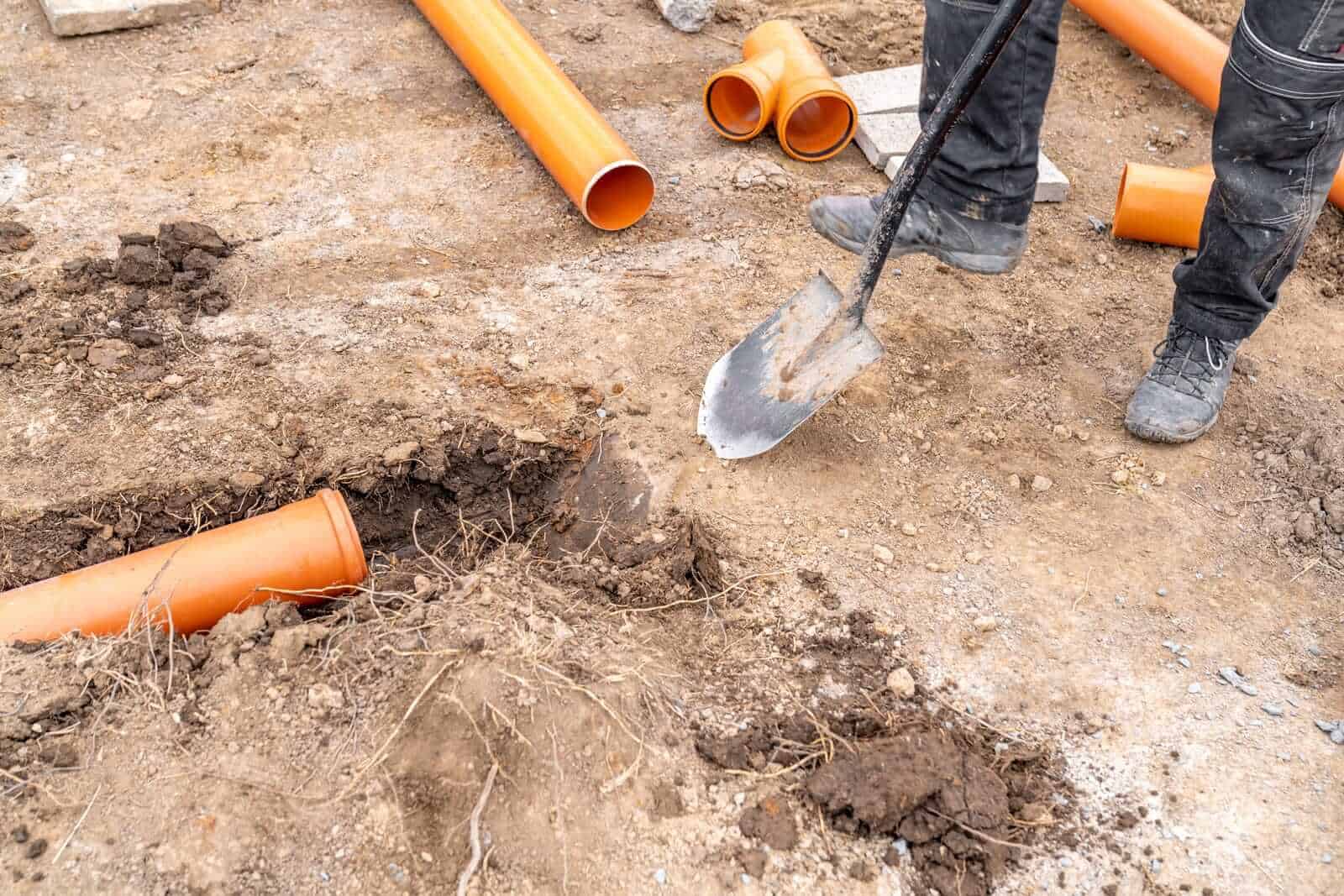
When your sewer line is damaged or breaking down, you can now have the plumbers repair it without ripping up your landscaping and driveways. Your plumber can use several trenchless methods, depending on a camera inspection assessment of the condition of your sewer pipes.
Pipe Lining
If your sewer pipe is prone to minor leaks, cracks, and wear, it may be better suited for the more straightforward trenchless repair method known as pipelining. This technique involves inserting a resin-saturated liner into the existing sewer pipe. This liner is then cured with heat. The result is a smooth, strong, and durable new pipe far less prone to damage.
This trenchless sewer line replacement method is ideal for pipes under streets, sidewalks, or parking lots. It can be performed with little to no impact on these surfaces, making it a popular option amongst property owners.
Pipe lining is also an excellent choice for sewer lines with significant material loss, as it can effectively fix these issues. This is because the liners are very durable and can withstand much pressure. The liners also don’t restrict flow or reduce the pipes’ ability to carry waste, so you won’t have to worry about reduced functionality.
The only downside to this trenchless sewer line replacement technique is that it can’t be used on clogged pipes or those with structural problems like sagging and bellying. These issues can only be fixed by completely removing and replacing the old sewer line with a new one. Luckily, Jones Services offers another trenchless sewer line replacement technique called pipe bursting that can address these issues.
Pipe Bursting
A trenchless method is ideal when your sewer lines need repair or replacement. Rather than digging large trenches across your property, pipe bursting breaks apart and replaces existing pipes. This technique utilizes a unique tool that splits the old lines and, at the same time, pulls behind it a new pipe to replace them.
This method is typically used for older clay and cast iron pipes. It can also be utilized when upgrading your sewer line to a larger diameter. It can be completed quickly and with minimal disruption of your home or business, saving you money in cleanup costs and restoration efforts.
Before work begins on your lateral lines, an experienced plumber will use a camera inspection to evaluate the condition of the existing pipe. Two small entry and exit points are dug where the work is to take place, and from there, a hydraulic tool called a bursting head is pulled through the existing pipe, breaking it into pieces while drawing a new HDPE (high-density polyethylene) pipe in its place.
Compared to traditional excavation methods, this is an efficient and effective way to replace damaged or failing lateral pipes. Unlike conventional excavation, the best part is that it will not result in extensive and costly damage to your landscaping or concrete surfaces.
Pipe Coating
When your sewage lines are damaged, it’s essential to address the issue immediately. Otherwise, you could end up with sewage backups that can harm your health. These issues aren’t just frustrating – they can also be expensive to repair and cause extensive damage to your property. Thankfully, there are now methods of sewer line repair that can be used to minimize the impact on your property and get your pipes up and running as quickly and reliably as possible.
One of the most common trenchless sewer line repair techniques is pipelining. This process involves placing an epoxy-coated sleeve over your existing sewer drain. The sleeve is then inflated and cured, creating a new pipe inside the old one. This technique can repair cracks, holes, rusting, channeling, and age-related deterioration. It can also be used to increase the flow capacity of your sewer line.
Trenchless pipe coating is an excellent choice for your sewer line repair when you want to preserve the integrity of your existing pipe and prevent future problems. This method is much less invasive than traditional pipe repairs and can usually be completed daily. It only requires the crew to dig two small access holes at the beginning and end of the sewer line, which can be done without tearing up your landscaping or driveway.

Pipe Assemblies
Like other plumbing components, sewer lines are subject to wear and tear. Eventually, your pipes will break down and need to be replaced. Traditional excavation is costly and time-consuming, but several trenchless methods for replacing your sewer line are less invasive.
One popular method is called pipe bursting. Technicians dig two access holes at either end of the damaged pipe and then pull a high-density polyethylene (HDPE) pipe through the old damaged pipe. This process breaks apart the old line and creates a new tube inside the existing pipeline.
The resulting structure is free of all the old pipe’s problems, including cracks, gaps, channeling, age deterioration, and scaling. The new line is also more extensive than the previous one, which increases flow capacity.
This is an excellent option for replacing sections of your pipeline that have severe damage or are failing. However, there are better choices than this trenchless technique for replacing your entire pipe. It’s less durable than the CIPP method and can cause joints, tees, and elbows issues.
Slip lining is another trenchless sewer line repair method that involves slipping a liner into your existing pipe to fix leaks. This solution is excellent for minor leaks, small cracks, and general wear and tear. However, pro plumbers agree that the CIPP method is more long-lasting and can last decades without needing repairs.
You may also like: