After a big storm rolls through, the first thing most of us do is peek outside to see what happened. While you might be relieved to find your home intact, the trees on your property can tell a different story. Fallen branches, leaning trunks, and other damage can pose a serious risk to your family and your home. Knowing how to spot the danger and when to get help is key to keeping your property safe.
Assessing Storm Damage Risks
When a storm hits, things can get pretty chaotic. Before you start any cleanup, your top priority should be to take a quick, safe look from a distance. Watch out for immediate dangers like downed power lines tangled in branches or big limbs hanging precariously over your roof, driveway, or yard. These are definitely not DIY situations. Snap some photos of the damage for your insurance company. And remember to keep a safe distance from any damaged trees, as branches can fall without warning. Your first look should be about spotting urgent threats, not a super-detailed inspection. There are some basic guidelines for home safety after a storm that can help you avoid common dangers during this initial check.
Recognizing Hazardous Trees
Some trees look perfectly fine at first glance but could actually have hidden weaknesses. It’s helpful to know the common signs of a hazardous tree so you can spot trouble before it gets worse.
Keep an eye out for these warning signs:
- Big, dead branches: People call these “widow-makers” for a reason. They can snap off and fall at any time.
- Cracks or splits in the trunk: Deep fissures, especially those that go through the bark into the wood, really compromise the tree’s strength.
- A sudden lean: If a tree that used to stand straight is now tilting, its root system might have taken a hit.
- Fungi or mushrooms growing on the trunk: This can signal internal rot and decay, even if the tree looks healthy on the outside.
When to Call for Professional Help
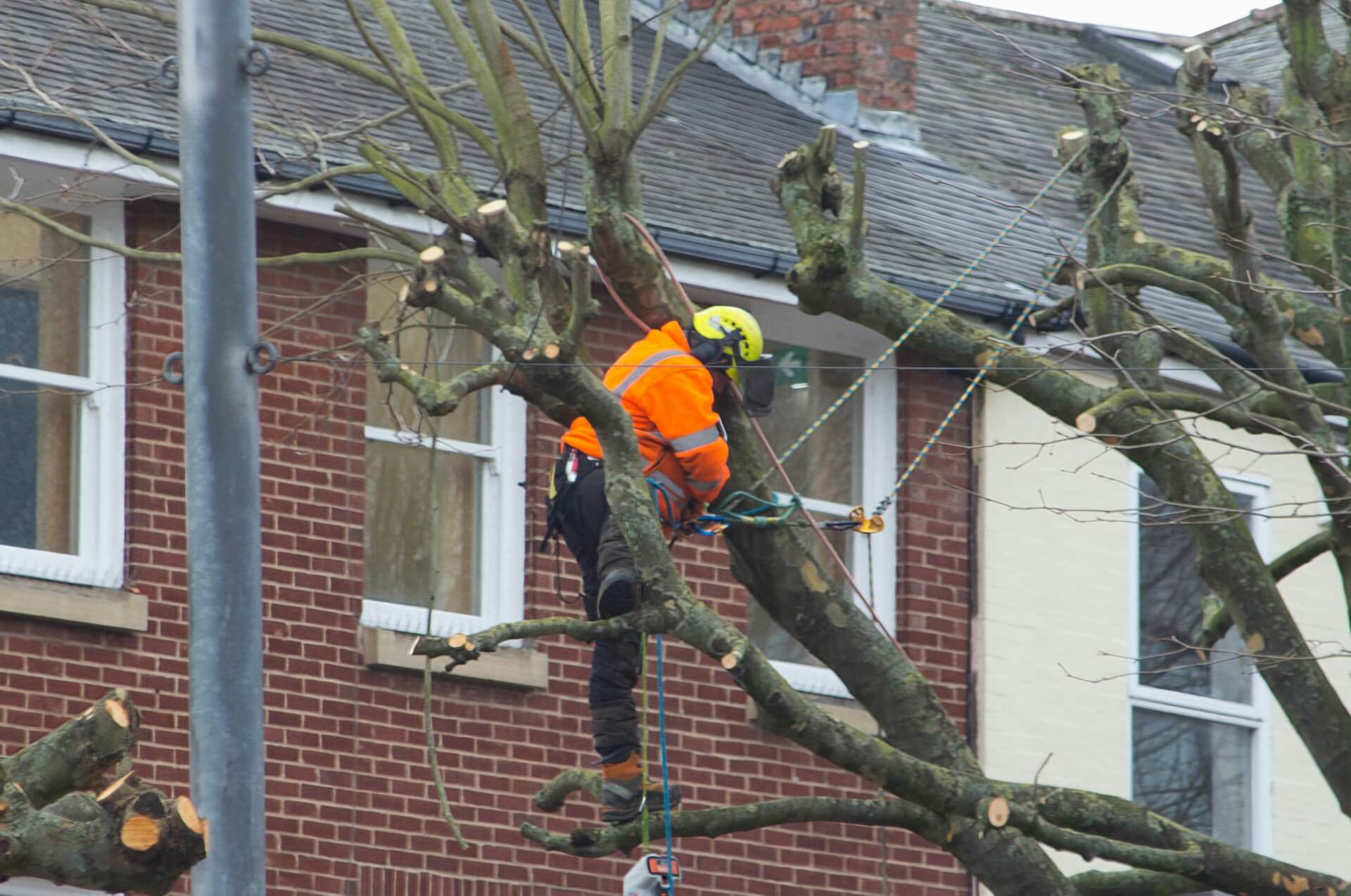
While cleaning up a few small twigs is totally doable for most homeowners, some situations absolutely need a professional. If a tree is leaning towards your house, tangled in utility lines, or has huge, broken branches hanging overhead, it’s time to call an expert to avoid serious injury or damage to your property. A certified arborist has the special equipment, training, and insurance to handle these dangerous jobs safely and efficiently. They can check out the tree’s condition and determine the safest way to remove or prune it, keeping both you and your home protected.
Safety First After a Storm
Your personal safety is the most important thing after a storm. Never go near a downed power line, and always assume it’s live and call your utility company right away. Be careful standing under damaged trees, as weakened limbs can give way unexpectedly. When you start cleaning up smaller debris, wear protective gear such as sturdy gloves, long sleeves, and safety glasses to protect yourself from sharp branches and hidden hazards. Don’t push yourself too hard. Clearing storm debris can be tough work, so take frequent breaks and stay hydrated. If a job looks too big or feels unsafe, it probably is.
Preventative Measures for Future Storms
Regular tree maintenance can make your property much more resilient to high winds and heavy rain. Think about having your trees inspected every few years, especially the big, mature ones. An expert can find and remove weak or dead branches, thin the canopy to allow wind to pass through more easily, and check for signs of disease or rot. Keeping your trees healthy is an investment that can save you from costly and dangerous emergency situations down the road.