
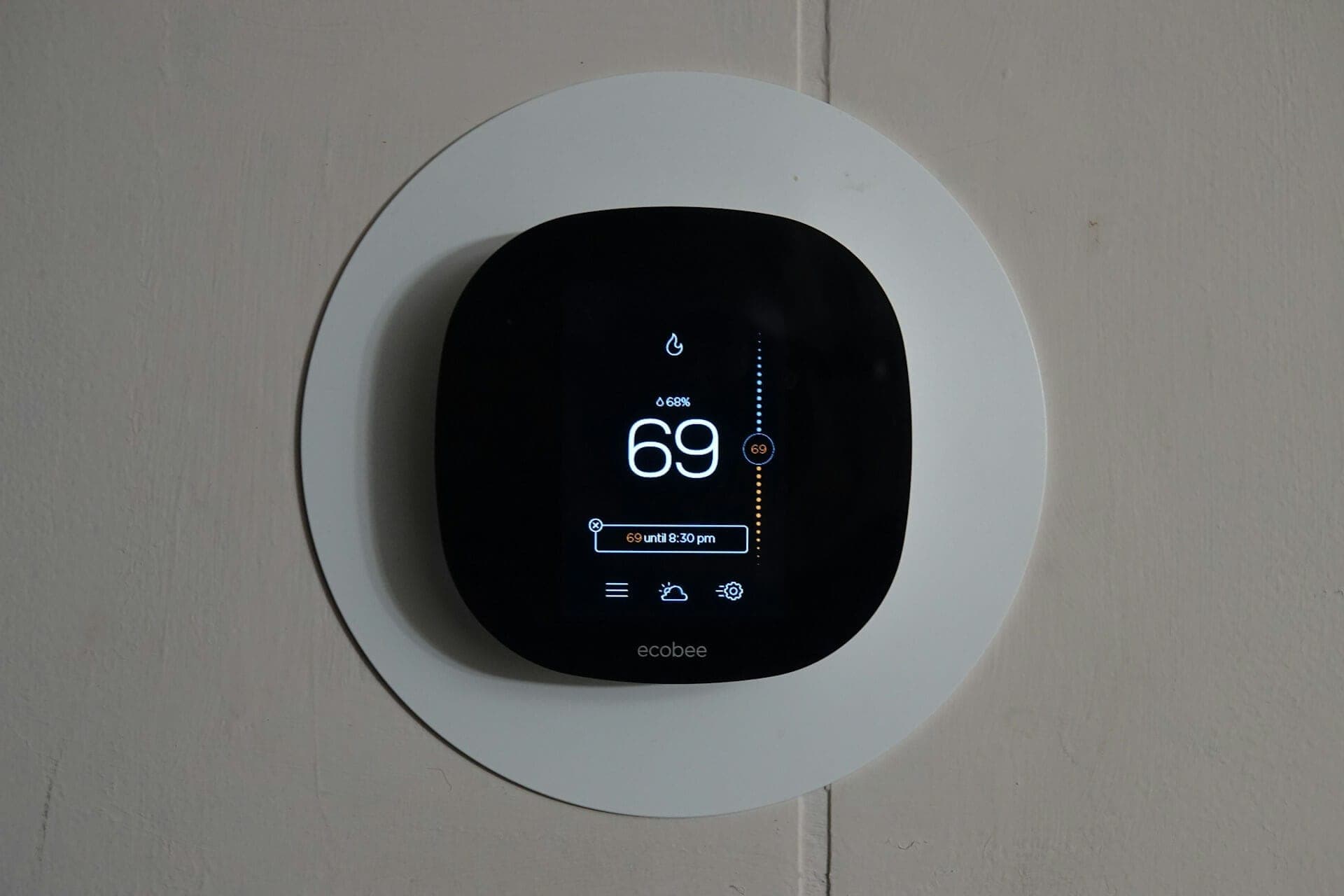
For many homeowners nowadays, smart technology is creeping into the home at a rapid place. A lot of what we use around the home is smart, whether it’s an appliance or your whole heating system.
Smart heating systems have gone from being luxury gadgets, to something more mainstream as a home upgrade. It replaces traditional manual, one-size-fits-all thermostats with internet-connected devices that are able to learn and adapt, as well as providing the ease of remote control functionality too.
If you’ve been looking into a smart heating system, then there are plenty of ways in which you can do this successfully.
How smart heating systems work
Let’s begin with how smart heating systems work. Smart heating systems connect to your boiler or heat pump and communicate with a home’s WI-FI network to provide remote control and intelligent automation. Let’s break this down into what’s included typically within a smart heating system.
The brain (a smart thermostat)
The brain of the smart heating system is the thermostat. This replaces the standard, non-connected wall thermostat and manages the whole-house temperature.
Remote control and apps
It typically comes with a smartphone app that allows the users to adjust temperature from anywhere, inside and outside of the home. This eliminates the need to be at home to manage the heating.
Learning and automation
Many models will use AI to learn a household’s heating routine over a few days. Whether that’s when you wake up, when you leave for work and return at the end of the day. It ends up creating a customized and automated schedule.
Geofencing
Using the location of a user’s phone, the system will detect when the home is unoccupied in order to turn down the heat and turn it back up once the users are on their way back.
Zonal heating
A smart thermostat will make use of smart thermostatic radiator valves which enables the system to heat specific rooms independently, preventing the need to heat empty rooms.
Weather compensation
Systems can also check the local weather forecasts and adjust the heating accordingly. For example, turning down the heating if the sun is warming the room naturally.
Why homeowners are paying attention
So why are some homeowners paying more attention to the use of smart heating systems? Well, the surge of popularity is due mainly to the significant energy savings that a smart thermostat can provide, reducing heating costs by up to 10-25%. Let’s take a look at why some homeowners are choosing to switch to smart heating systems this year.
Convenience and comfort
Users are able to set the temperature while in bed or on the sofa, as well as on their way home from work, so they avoid returning to a cold home.
Data-driven insights
With many apps that are connected to the smart heating system, they provide detailed energy reports, allowing homeowners to understand consumption patterns and identify areas to reduce waste.
Integration with smart home ecosystems
Most smart thermostats will work with voice assistants like Google Home and Amazon Alexa.
Environmental impact
By reducing energy waste, systems contribute to smaller carbon footprints and is a major factor for those who are conscious about their impact on the environment personally.
If you’re looking at a smart heating system for your home, it might be worth considering them as an option soon or in the future.